


Process Technology students learn to operate complex industrial machinery, including boilers, turbines, pumps, distillation columns, and control systems (DCS/PLCs) used in power, refining, chemical, and other plants. They focus heavily on safety protocols, process monitoring, troubleshooting, reading diagrams, and maintaining operations through hands-on training and simulators to ensure efficient, safe production of energy and products. Contact ITI Technical College today for more information.
Key Areas Of Study And Skills In Process Technology
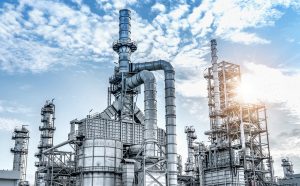 The Process Technology (PT) Program teaches the basic concepts, skills, and terminology necessary for graduates to obtain entry-level positions in power plants and refineries. Students enrolled in an Associate of Occupational Studies (AOS) Degree in the Process Technology Program are trained as PT technicians with knowledge and skills in these essential areas:
- Equipment Operation: Mastering key machinery such as furnaces, compressors, heat exchangers, reactors, steam systems, and electrical/power systems.
- Process Control: Understanding instrumentation and control loops to monitor and adjust processes in real-time.
- Safety & Environment: Intensive training in hazardous materials, emergency response, environmental regulations, and safety culture.
- Technical Fundamentals: Applying chemical principles, mechanical technology, and applied math to industrial settings.
- Diagram Interpretation: Reading and creating P&IDs (Piping and Instrumentation Diagrams) and other process flow diagrams.
- Troubleshooting: Diagnosing and resolving issues within complex plant operations.
Process Technology Program Teaching Methods
Process technology students are taught with state-of-the-art methods in quality programs to run power plants and refineries. They engage with instructors in classroom studies where they gain knowledge of the industry, PT theory, and specific details of a technician’s job. They develop necessary skills in laboratory work where they work with “real-world” machinery, devices, and equipment.
|
“Process Technology students learn to operate complex industrial machinery, such as boilers, turbines, pumps, distillation columns, and control systems (DCS/PLCs) for power, refining, chemical, and other plants.” |
A Typical Process Technician’s Job Description
Process technicians gain the knowledge and develop skills to meet the requirements found in job descriptions. Process technicians should have a strong working knowledge of computer operations and basic math, and use their skills to ensure processes function properly. They perform these duties:
- Apply analytical skills to solve problems
- Research, collect, analyze, and use relevant data
- Use communication skills effectively
- Apply detail-oriented thought and methodology
- Monitor and improve manufacturing processes
- Inspect, monitor, and operate processing equipment
- Plan workflows and maintain production logbooks
- Practice and maintain workplace safety
- Test product batch quality
- Document and report equipment malfunctions
A Power Plant or Refinery Operator’s Responsibilities
With experience and advanced expertise, PT technicians may advance to assistant plant operators or general plant managers. Operating power plants and refineries involves complex, continuous industrial processes focused on transforming raw materials into usable energy products, requiring constant monitoring, specialized engineering, stringent safety protocols, and continuous maintenance.
Operating Power Plants
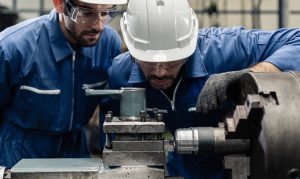 Power plants convert various forms of energy (fossil fuels, nuclear, and renewable sources) into electricity. Key operational activities include:
- Energy Conversion: Managing processes where fuel sources such as natural gas, coal, or nuclear energy generate heat to produce high-pressure steam that spins turbines.
- Generation and Transmission: Operating generators that convert mechanical energy from turbines into electrical energy and synchronizing output with the power grid for transmission through power lines.
- Monitoring and Control: Continuously tracking temperatures, pressures, and system parameters using automated control systems to ensure safe and optimal plant operation.
- Maintenance and Safety: Performing inspections, troubleshooting system issues, and enforcing safety protocols, including the use of emission control systems like scrubbers and carbon capture technologies.
- Fuel Management: Ensuring a reliable fuel supply (such as natural gas, coal, or oil) and managing byproducts like excess heat, often dissipated through cooling systems or water bodies.
Operating Refineries
Refineries operate continuously to transform crude oil into various usable petroleum products like gasoline, diesel, and jet fuel. Key operational activities include:
- Separation (Distillation): Operating atmospheric and vacuum distillation columns where heated crude oil is separated into different components, or “fractions,” based on their boiling points.
- Conversion and Treatment: Managing processes such as cracking (breaking large molecules), reforming (changing molecular structures), and hydrotreating (removing sulfur and nitrogen) to meet product specifications and environmental standards.
- Quality Control and Blending: Ensuring products meet pipeline and market standards by blending various components, such as combining gasoline with ethanol.
- Logistics and Storage: Overseeing the receipt of crude oil via pipelines or tankers, along with the storage and distribution of finished products through trucks, ships, or railcars.
- Process Safety and Compliance: Following strict safety and environmental regulations (such as OSHA and API standards) through hazard analysis (HAZOP), emergency shutdown systems, and continuous monitoring. Refineries may also use integrated power systems to utilize excess heat and improve efficiency.
How To Earn A Process Technology Degree
It’s easy to learn more about earning a Process Technology (OAS) Degree to work in power plants and refineries. Request information online about ITI Technical College and its PT Program. We look forward to hearing from you.