
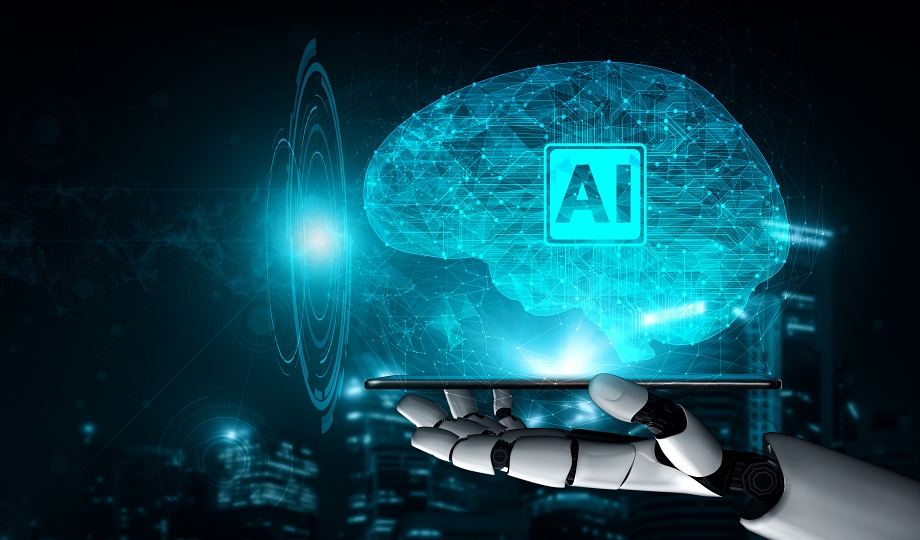
AI and job loss are often misunderstood—rather than simply replacing jobs, AI is transforming them. Instead of taking over entirely, AI handles repetitive and time-consuming tasks, allowing professionals to focus on more strategic, creative, and human-centered work.
How AI Is Changing The Nature Of Work
 Each of us must see how AI is changing the nature of work. By doing so, we can begin to understand the pros and cons of AI and how it may affect us.
- Job displacement and transformation: Some jobs are being eliminated, while others are being transformed as AI takes over certain tasks, leaving humans to focus on other aspects. For example, a radiologist’s job is more than just reading X-rays; it involves other complex skills that aren’t being automated.
- New jobs and opportunities: AI is creating new roles, much like the internet did with jobs like social media influencer and app developer.
- Increased productivity: AI can significantly boost productivity, allowing companies to complete tasks faster and save money, leading to economic growth.
AI And Job Loss: Jobs At Higher Risk
Studies show that some jobs are at a higher risk of being replaced by AI and automation. They appear across many industries in the U.S. and abroad, including.
Jobs Less Likely To Be Replaced
While some jobs are at higher risk of disappearing, many others are less likely to be replaced by AI and automation. These occupations are essential services our economy needs:
|
“The most immediate effect of AI in the workplace is not outright job replacement but rather job transformation.” |
AI And Job Creation
 All is not lost with the global expansion of AI and automation. AI is directly creating new job categories that did not exist until recently. These include AI engineers, AI ethicists, prompt engineers, policy specialists, AI integration specialists, and machine learning specialists. It’s also important to note these effects:
- Net job growth: The World Economic Forum projects that AI and automation will create 170 million new jobs globally by 2030, while displacing 92 million, for a net gain of 78 million jobs.
- Augmentation and productivity: For many workers, AI will augment their existing roles rather than replace them.
How To Adapt To The Changing Job Market
When thinking about AI and job loss, there are actions you can take to avoid becoming unemployed. This can entail enrolling in a technical or community college to upgrading your professional knowledge and skills. Focus on learning new skills and reskilling, particularly those that AI cannot replicate, such as emotional intelligence, critical thinking, and creativity.
Since AI and automation handle more routine tasks, they also focus on the uniquely human aspects of your role, such as building relationships, providing empathy, and making strategic decisions.
Develop New Occupational Skills At ITI Technical College
If you need upskilling in your current career or for a new one, consider the job training that ITI Technical College provides. Our award-winning college and programs have helped thousands of graduates obtain technical jobs in many industries since 1973. Our 7 Associate of Occupational Studies (AOS) Degrees and 4 Certificate programs will prepare you for entry-level jobs in a range of industries. Request more information about our college and programs, and start your journey to a better life.