

Choosing between an HVAC and an Electrical Technology program comes down to your career preferences. HVAC suits those who want a varied, multidisciplinary role working in the field and the office. Electrical Technology is ideal for those who prefer specializing in power systems, intricate circuitry, and consistent code-based work. Both degree programs are available at ITI Technical College in Baton Rouge. Contact us today for more information.
HVAC And Electrical Technology Comparison At A Glance
To help you make a decision between HVAC Technology and Electrical Technology, review this chart. This is the place to start for making a career comparison.
| Feature | HVAC Technology | Electrical Technology |
| Core Focus | Heating, ventilation, air conditioning, and refrigeration systems. | Circuitry, wiring, power distribution, and electrical theory. |
| Skillset | Multidisciplinary; combines mechanics, electricity, plumbing, and computer systems. | Highly specialized; focuses entirely on electrical codes, grounding, and power. |
| Training Duration | 6 months for a Certificate and 2 years for a Degree (usually trade school). | 6 months for a Certificate and 2 years for a Degree (usually trade school). |
| Work Environment | Varied and often physically demanding (cramped spaces, hot attics, cold rooftops). | Inside or outside structures; often requires heavy lifting, stamina, and precision. |
| Specialized Certifications | EPA Section 608 Certification (required to handle refrigerants), NATE, HVAC Excellence. | ETT, CEST, or CET certifications. |
Deep Dive: Which Program Fits You Best?
 Choose HVAC Technology If:
- You like variety: No two days are the same. You will work on different types of equipment, troubleshooting everything from mechanical components to electrical control boards.
- You are a “Jack-of-all-trades”: HVAC requires you to fix or maintain air flows, copper piping, and electronic thermostats, all in a single service call.
- HVAC technology training in Louisiana: HVAC programs can often be completed in six months to two years, allowing you to enter the workforce much faster than a standard electrical apprenticeship.
- You are comfortable with temperature extremes: Be prepared to work in uncomfortable environments like freezing winter rooftops or sweltering summer attics.
Choose Electrical Technology If:
- You prefer specialization: Electricians focus strictly on the flow of power, reading schematics, and executing electrical layouts.
- You value a highly structured career path: Electrician training typically takes two years to earn an associate degree at an electrician trade school.
- You are detail-oriented and safety-minded: Electrical work requires strict adherence to complex safety codes and the ability to strictly follow power management standards.
- You want broader industry demand: Electrical growth is consistently driven by modern infrastructure upgrades, smart building tech, and the transition to renewable energies and electric vehicle (EV) charging networks.
|
“Choosing between an HVAC and an Electrical Technology program comes down to your career preferences.” |
Salary and Career Outlook
Both trades offer robust career security as they require continuous industry training, which ensures credentials remain relevant across decades.
- Salary: Both fields offer solid starting salaries and excellent long-term earning potential. According to the Bureau of Labor Statistics, earnings generally range from entry-level averages of $35,000 to $43,000 annually, climbing upwards of $70,000 to $80,000+ with experience. Electricians traditionally command a slightly higher average annual salary, though commercial and industrial HVAC work can yield similar or higher wages.
- Career Growth: Both paths offer the opportunity to start your own contracting business, take on supervisory roles, or move into commercial settings.
- Program Types: To explore more about program types, check out the HVAC vs. Electrical Careers Guide or compare trade credentials using Coursecareers.
HVAC Training At ITI Technical College
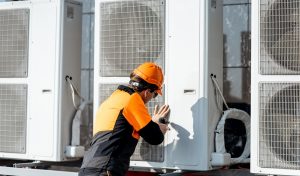 Exploring the Air Conditioning, Refrigeration, & Electrical Technology (AOS) Associate in Occupational Studies Degree at ITI Technical College will provide the details to help you make a career decision. A short-term Air Conditioning & Electrical Technology Certificate training program is also available.
This degree and certificate prepare you for entry-level positions and updating your knowledge of and skills in the industry. HVAC technicians are in demand in virtually every state, and now is a great time to work in this industry.
Electrical Technology Training At ITI Technical College
Electrical technology training at ITI Technical College is part of two different Degree programs and three different Certificate programs, including some overlapping content. Review both to help make your choice of careers.
HVAC Associate Degrees (AOS)
- Automation & Electronic Systems Technology (AOS)
- Air Conditioning, Refrigeration, & Electrical Technology (AOS) – Discussed above.
HVAC Certificates
- Electrical Technology
- Electronic Systems Technology
- Air Conditioning & Electrical Technology – Discussed in section 4
These degrees and certificates prepare you for entry-level positions and help you update your knowledge of and skills in the industry. Jobs are available in this industry, and now is the time to begin your training at ITI Technical College.
Disclosure:
For more information about graduation rates, the median debt of students who completed the program, and other important information, please visit our website: https://iticollege.edu/disclosures/