

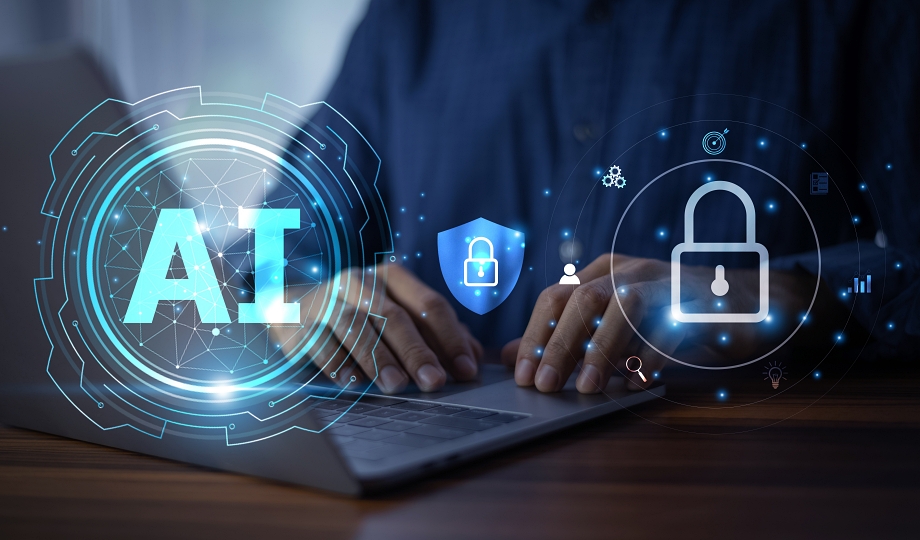
What Is Cybersecurity?
 Cybersecurity is the practice of protecting computers, servers, mobile devices, networks, and sensitive data from digital attacks, unauthorized access, interruptions, or damage. It is primarily designed to safeguard the confidentiality, integrity, and availability of information against malicious actors, ransomware, and phishing. Core concepts include:
- The CIA Triad: The foundational model for cybersecurity.
- Confidentiality: Ensuring data is only accessible to those authorized.
- Integrity: Safeguarding data from being altered or tampered with.
- Availability: Ensuring authorized users have reliable access to systems and information when needed.
- Key Pillars: It requires a combination of robust technologies (e.g., firewalls, antivirus software), clearly defined processes, and human awareness.
- Malware: Malicious software—such as viruses, spyware, or ransomware—designed to damage or gain unauthorized access to a computer system.
- Phishing: Fraudulent emails or messages sent to trick individuals into revealing sensitive information like login credentials or financial details.
- Network Security: Protecting your infrastructure from unauthorized access, misuse, or theft.
- Cloud Security: Securing data and applications stored in cloud computing environments.
- Application Security: Using defensive mechanisms during and after software development to protect apps from being hijacked.
As our reliance on technology grows, everything from daily communication to critical infrastructure, such as healthcare and power grids, can be hacked. Cybersecurity is essential to prevent financial loss, identity theft, and severe disruptions to everyday life. Resources to help individuals and organizations manage digital risk are available through the Cybersecurity and Infrastructure Security Agency (CISA).
Cybersecurity: The Changing Threat Landscape
The changing threat landscape shows that hackers are becoming more sophisticated in their endeavors. As a result, organizations have adopted newer AI cybersecurity measures to address these extensive issues:
- Automated & Scalable Attacks: Hackers utilize AI agents to rapidly scan exposed ports and networks for vulnerabilities, testing millions of combinations in seconds.
- Advanced Social Engineering: AI large language models (LLMs) allow attackers to generate highly convincing, error-free phishing emails in multiple languages, while deep-fake technologies are used to mimic voices and faces for complex social engineering scams.
- Malware Development: AI speeds up the creation, iteration, and deployment of polymorphic malware and ransomware that can evade traditional signature-based detection methods.
|
“AI drastically reduces response times by analyzing massive datasets, identifying anomalies, and autonomously resolving threats.” |
AI And Cybersecurity: The Evolving Defense Strategy
AI defensive strategies are evolving to meet the evolving sophisticated cybercriminal activities. The following describes how AI detects cyber attacks and threats.
- Predictive Threat Detection: Rather than waiting for a known attack signature, AI employs “good-behavior” models to detect unusual network activity, erratic file behaviors, and zero-day threats in real-time.
- Autonomous Incident Response: AI-driven Security Operations Center (SOC) agents can triage alerts, isolate compromised systems, and block malicious traffic in a fraction of the time it takes human teams.
- AI for Bug Hunting: Defensive AI systems are also being used by security teams (like Anthropic’s research initiatives) to proactively scan massive open-source codebases to identify hidden flaws and vulnerabilities before they can be exploited externally.
How AI Contributes To Preventing Cyberattacks
 Besides responding to cyberattacks, AI also plays a significant role in network security by stopping them before they cause damage. AI uses a complete defensive set of steps (DARR) that includes:
- Detection – AI scans for unusual activity, such as unusual login attempts or unfamiliar network behavior. It quickly spots signs of an attack, even ones it hasn’t seen before.
- Analysis – When suspicious activity occurs, AI determines what it is, if it is serious, and what systems, networks, equipment, and data could be affected.
- Response – When a threat is real, AI can quickly access and isolate systems, or send alerts to stop the attack before it spreads.
- Recovery – After an attack occurs, AI helps systems return to normal and uses what it learned to detect similar threats more quickly in the future.
Interested In A Cybersecurity Career?
According to the Bureau of Labor Statistics, jobs for Information Security Analysts are expected to grow 29 percent from 2024 to 2034. This is much faster than the average for all occupations. About 16,000 job openings are projected each year, on average, over this decade.
Now is a great time to prepare for a career in Cybersecurity and Artificial Intelligence. The Information Technology (AOS) Associate in Occupational Studies Degree at ITI Technical College prepares graduates for this type of employment. The Cybersecurity and Artificial Intelligence (AI) Specialization is the program option to choose for appropriate knowledge and skills. We invite you to explore what we have to offer your career.
Disclosure:
For more information about graduation rates, the median debt of students who completed the program, and other important information, please visit our website: https://iticollege.edu/disclosures/