

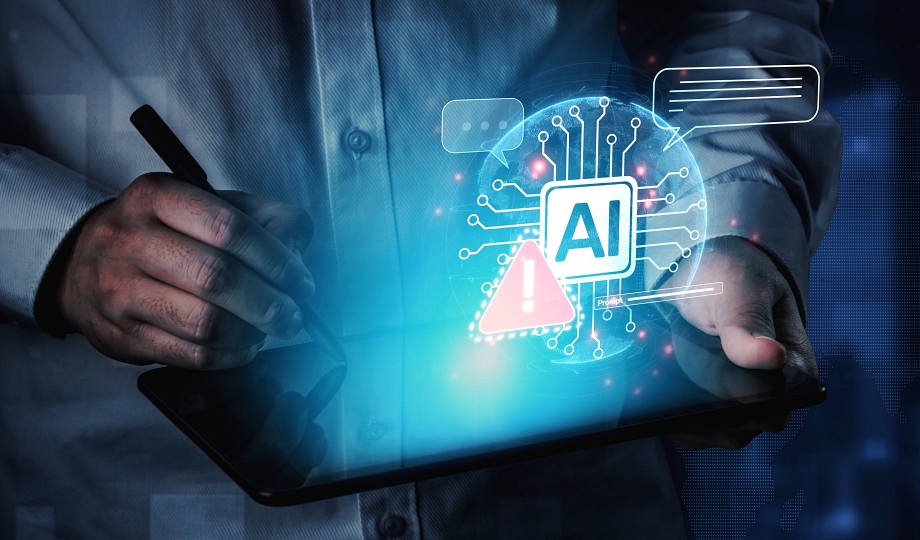
AI threat detection uses machine learning, behavioral analytics, and automation to identify, classify, and neutralize cybersecurity threats in real time. Unlike traditional security tools that rely on static, pre-defined rules, AI-driven systems focus on recognizing anomalous activity and subtle patterns. AI can spot zero-day exploits, novel malware, and sophisticated social engineering before damage occurs. An associate degree in Information Technology is essential to work with AI threat detection. Contact ITI Technical College today for more information.
The Evolution: Traditional VS. AI Detection
 Security operations have shifted from reactive, rigid matching to proactive, adaptive learning. Operations are more effective now, as you can see from this comparison:
- Traditional Detection: Relies heavily on signature-based rules. If a virus or attack pattern does not match a known database entry, the system misses it entirely.
- AI-Powered Detection: Leverages deep learning and behavioral analytics. It continuously tracks identities, networks, and cloud environments to uncover unknown vectors by analyzing deviations from normal operational behavior.
How AI Threat Detection Works Step-By-Step
AI systems turn massive streams of raw enterprise data into prioritized, actionable insights through a standardized execution pipeline: [ Data Ingestion ] ➔ [ Behavioral Baselining ] ➔ [ Pattern Evaluation ] ➔ [ Correlation & Triage ] ➔ [ Automated Response ].
- Data Ingestion: The system continuously collects telemetry—such as cloud API calls, network traffic, user authentication logs, and endpoint file activity—across the enterprise ecosystem.
- Behavioral Baselining: AI maps out what “normal” behavior looks like for every user, device, service account, and application within that specific environment.
- Pattern Evaluation: Machine learning models run simultaneously to flag issues. Supervised learning models cross-reference known attack footprints, while unsupervised models isolate unexpected operational deviations.
- Correlation & Alert Triage: Instead of outputting thousands of disconnected alerts, the AI stitches isolated anomalies into a cohesive attack narrative. It scores and prioritizes alerts based on actual risk to reduce analyst alert fatigue.
- Automated Response: When a high-confidence threat is confirmed, the system initiates machine-speed containment, such as auto-isolating a compromised endpoint or revoking a leaked API key to freeze lateral movement.
|
“AI can spot zero-day exploits, novel malware, and sophisticated social engineering before damage occurs.” |
Core Technologies Driving AI Security
Modern platforms combine multiple subsets of artificial intelligence to catch complex cyberattacks. Anomaly detection flags infrastructure outliers, such as massive off-hours data transfers or unexpected privilege escalation. Natural language processing (NLP) parses communication context, text structures, and metadata in emails to defend against targeted spear-phishing and social engineering.
Heuristic and deep learning processes complex, multi-layered data arrays to evaluate code behaviors in real-time, pinpointing zero-day malware variants. Machine learning and behavior baselining use algorithms to analyze telemetry data to map out standard operating behaviors for all users, devices, and applications.
Graph neural networks (GNNs) map the complex relationships and interactions between users, endpoints, credentials, and cloud resources. Generative AI and large language models (LLMs) translate complex alert code into plain-language summaries and automatically draft incident response playbooks for human analysts
Primary Benefits Of AI Threat Detection For Organizations
 Implementing AI inside a Security Operations Center (SOC) delivers substantial structural advantages that all organizations need and can appreciate, including:
- Drastic Noise Reduction: By correlating alerts with environmental context, AI filters out benign abnormalities, minimizing false positives.
- Identity-First Proactive Defense: It maps closely to Zero Trust frameworks, actively monitoring human users alongside non-human identities, such as service accounts, automated software agents, and API keys.
- Accelerated Mitigation: Cuts attacker dwell time from days or weeks down to seconds via instantaneous automated containment workflows.
Primary Challenges Of Using AI Threat Detection
The primary challenges of using AI threat detection for organizations include data quality issues, adversarial attacks, vulnerabilities, alert fatigue, and false positives. Technical and operational issues with data quality and reliability exist. AI models need massive amounts of clean data. Bad or incomplete data makes the system miss real threats or make mistakes. Sensitive AI setups can flood workers with fake warnings and false positives. This leads to alert fatigue where real dangers get ignored. Fitting new AI tools into older computer systems is hard, costly, and presents integration hurdles.
Security and attack risks are always present in the form of adversarial manipulation. Hackers use small tweaks to input data to trick AI into missing malicious activity. Bad actors use data poisoning by slipping fake info into training sets, so the AI makes poor choices later. Hackers interject expanded attack surfaces with APIs, connected models, and autonomous agents to create new entry points for breaches.
Human and compliance constraints are typically present for virtually all organizations. Finding experts who know both AI and cybersecurity is very difficult, creating a skill shortage. Regulatory compliance, such as GDPR privacy rules, makes storing and processing large security logs complex.
Develop your knowledge and skills with appropriate training and education to use AI threat detection professionally. Explore ITI Technical College’s Information Technology (AOS) Associate in Occupational Studies Degree with the Cybersecurity & Artificial Intelligence specialization.
Disclosure:
For more information about graduation rates, the median debt of students who completed the program, and other important information, please visit our website: https://iticollege.edu/disclosures/