

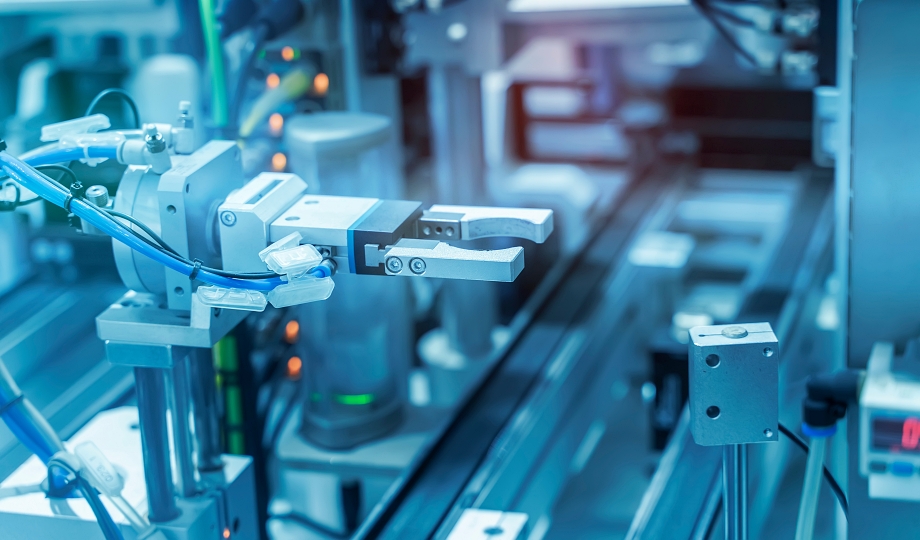
Process Technology and Automation Technology are two in-demand careers necessary for many of today’s industries. The core difference is that Process Technology focuses on how a product is made by defining the chemical, physical, or logical steps of a production sequence. Automation Technology focuses on who or what executes those steps by using machinery, software, and control systems to minimize human intervention. Contact ITI Technical College today for more information.
Think of Process Technology as the recipe and the kitchen design, and Automation Technology as the smart appliances and robotic chefs that cook the meal automatically. If you are interested in a career in either technology or both, check out their college training programs.
Core Conceptual Differences
 While closely related in modern manufacturing, processing facilities, and software systems, the two fields serve fundamentally distinct purposes. This chart compares their primary focus, key objectives, core elements, and an industry example in an easy-to-understand format.
| Feature | Process Technology | Automation Technology |
| Primary Focus | The underlying science, sequence of operations, and methodology of production. | The deployment of hardware and software to run operations autonomously. |
| Key Objective | To establish high-quality, optimal, and efficient production workflows. | To eliminate manual labor, reduce human error, and accelerate execution. |
| Core Elements | Chemical formulations, thermodynamics, mechanical workflows, and process parameters (e.g., temperature, pressure). | Programmable Logic Controllers (PLCs), robotics, sensors, actuators, and software loops. |
| Industry Example | Specifying that crude oil must be heated to exactly 350°C to separate components. | Installing a Distributed Control System to automatically adjust the heaters when sensors read 348°C. |
Understanding Process Technology
Process technology is the foundational architecture of production. It encompasses the specialized knowledge, equipment, and workflows required to transform raw materials into finished goods. Continuous and batch operations are used to determine how gases, liquids, or solids interact over time.
Engineers design process technologies to find the absolute best way to create and optimize something before any machines are plugged in. Modern process technology refers to the advanced equipment and digital tools used to convert raw materials into safe, useful, and consistent products.
- Data Integration: Replaces manual record-keeping with electronic tracking and data analytics to optimize efficiency and cut waste.
- Precision Equipment: Employs advanced physical, chemical, or biological processing machinery (like high-efficiency reactors, laser sensors, and automated filtration).
- Energy and Utilities: Oil refining, power generation, and wastewater treatment.
- Manufacturing: Chemical production, food and beverage processing, and pharmaceuticals.
- Advanced Tech: Semiconductor and micro/nano fabrication.
|
“Think of Process Technology as the recipe and the kitchen design, and Automation Technology as the smart appliances and robotic chefs that cook the meal automatically.” |
Understanding Automation Technology
Automation technology is the toolset used to execute the defined process without human effort or with minimal effort. It bridges the gap between raw process design and hands-free operations. Modern automation technology is the use of software, hardware, artificial intelligence, and control systems to complete tasks.
The control systems use hardware networks of sensors, actuators, and PID controllers to maintain stable system conditions. Feedback loops read data in real time and make split-second adjustments to maintain optimal conditions. Automation can be applied to physical manufacturing (like robotics) or digital business systems (like software bots moving data).
- Sensors and Actuators: Devices that gather live data from the environment and create physical movement or responses.
- Controllers and PLCs: Programmable logic controllers act as the “brains” that process instructions and run operations safely.
- Software and Bots: Programs that manage digital workflows, data entry, and system updates automatically.
 Robotic Process Automation (RPA): Software “bots” mimic human actions to handle repetitive digital tasks, such as invoicing and data sorting.
- Intelligent Automation (IA): Combines artificial intelligence (AI) and machine learning (ML) with process tools to analyze data and make complex decisions.
- Industrial Automation: Uses smart factory sensors, robotics, and edge computing to run assembly lines and predict machine repairs.
- IT Automation: Manages software updates, user account setups, and cloud networks without manual work.
How The Technologies Work Together
In modern industrial settings, these two forces are deeply intertwined. Process Technology sets the parameters, and Automation Technology enforces them. For example, a process engineer uses process technology to determine that a pharmaceutical batch requires precise cooling to remain stable. An automation engineer then programs a cooling system with sensors and automated valves to make sure that the target temperature is maintained perfectly, 24 hours a day, without a human ever touching a dial.
How To Prepare For A Career In These Technologies
ITI Technical College provides industry-approved career training for graduates to find employment in entry-level positions. We offer Process Technology (AOS) Associate in Occupational Studies Degree and Automation & Electronic Systems Technology (AOS) Associate in Occupational Studies Degree Programs. Let us be your school of choice.
Disclosure:
For more information about graduation rates, the median debt of students who completed the program, and other important information, please visit our website: https://iticollege.edu/disclosures/