

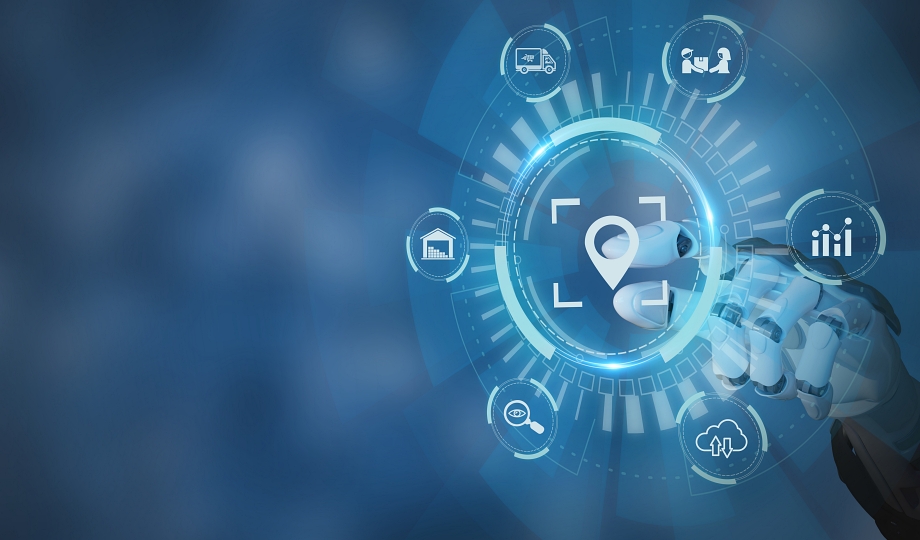
Digital twins are virtual representations of a real physical asset, system, or process that is continuously informed by data from the real-world object. Think of it as a living digital model of a pump, motor, compressor, production line, building system, or even an entire production process. Instrumentation technicians should understand digital twins because they are often the people who make them possible. A digital twin is only as useful as the data feeding it. An ideal place to learn to work with this concept is by enrolling in an instrumentation training program. Contact ITI Technical College today for more information.
Basics Of How Digital Twins Function
 Instrument and Control Systems Technicians maintain, adjust, install, repair, and troubleshoot instrumentation, equipment, and control circuits. They increasingly work with digital twins, and here is how the basics of digital twins function:
- Sensors provide the twin’s eyes and ears: Temperature, pressure, flow, vibration, level, position, electrical measurements, and other instrumentation provide the real-time data needed to represent what’s happening in the physical asset.
- Calibration becomes even more important: If a pressure transmitter is reading 5% high, the digital twin may be working perfectly—but it’s modeling bad information. Accurate calibration and proper sensor installation directly affect the quality of the digital model.
- Troubleshooting can become predictive: Instead of waiting for an instrument or piece of equipment to fail, a digital twin can help identify abnormal trends. For example, gradually increasing vibration or temperature might indicate developing mechanical problems.
- Instrumentation data connects the physical and digital worlds: Technicians increasingly need familiarity with technologies such as PLC/DCS systems, industrial networks, historians, SCADA, IIoT devices, and data protocols. The job isn’t necessarily becoming software engineering, but understanding how field data travels and gets used is increasingly valuable.
- Digital twins can improve maintenance and safety: A reliable digital model can help engineers and operators test scenarios, optimize processes, monitor equipment condition, and plan maintenance without unnecessarily disturbing the physical system.
Why Instrumentation Technicians Need To Know How Digital Twins Work
Instrumentation technicians (instrument techs) need to know how digital twins work because these virtual models rely entirely on the real-time sensor data, telemetry, and control loops that instrument techs install, calibrate, and maintain.
A digital twin is a continuously updated, live virtual copy of a physical system, asset, or process. Unlike a standard static simulation, a digital twin uses a two-way (bidirectional) data flow. Physical sensors feed live operational data into the virtual model, and the model analyzes performance to predict failures, optimize operations, and test adjustments. Here’s why it matters for instrument technicians:
- Sensor dependency: Digital twins are only as accurate as the physical data feeding them. Instrument techs manage the pressure transmitters, flow meters, thermocouples, and IoT devices that act as the “nervous system” of the twin. If a sensor drifts or fails, the digital twin receives bad data and makes false predictions.
- Troubleshooting and diagnostics: When a digital twin flags a divergence between expected behavior and actual performance, it often points to an impending mechanical fault, inefficiency, or a failing instrument. Techs use these insights to pinpoint problems before total system failure.
- Virtual commissioning and testing: Before modifying physical plant loops or adding new hardware, facilities use digital twins to test control logic safely in software. Techs must understand how the virtual control loop mirrors the physical instrumentation in the field.
- Calibration and data integrity: Knowing how data flows from the shop floor to the cloud helps techs ensure high data integrity, proper scaling, and minimal latency across industrial networks.
|
” Instrumentation technicians should understand digital twins because they are often the people who make digital twins possible.” |
A Simple Example Of Digital Twins
 Follow this simple example to better understand the common use of a pump by an instrumentation technician. Imagine a plant pump equipped with:
- A pressure transmitter
- Flow transmitter
- Temperature sensor
- Vibration sensor
- Motor: current monitoring
Those instruments continuously send information to the control or data system. A digital twin can use that information to establish what “normal” pump operation looks like.
If flow starts dropping while motor current and vibration increase, the system may flag a developing problem. The technician can investigate before the pump fails, rather than simply responding to the failure afterward.
The Big Takeaway
Digital twins don’t replace instrumentation technicians—they make accurate instrumentation even more important. For instrumentation professionals, the valuable skill set is expanding from “Can I install, calibrate, and troubleshoot this instrument?” to also understanding “Where does this instrument’s data go, how is it used, and can I trust it?”
That combination of field instrumentation + controls + industrial data is likely to become increasingly important as plants become more connected. If you are interested in a career in the growing field of Instrumentation and Control Systems Technology, review what ITI Technical College offers students.
Disclosure:
For more information about graduation rates, the median debt of students who completed the program, and other important information, please visit our website: https://iticollege.edu/disclosures/