

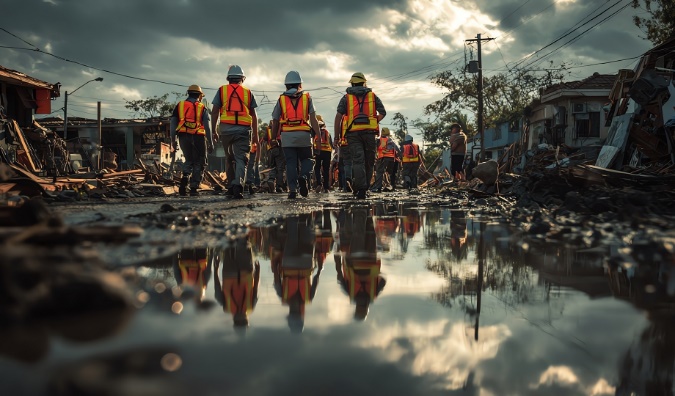
During disaster recovery and rebuilding, construction managers lead the assessment, planning, and reconstruction of damaged housing, commercial buildings, and public infrastructure. Their skills and knowledge of procedures to follow are developed in a construction management college program and through on-the-job training. Contact ITI Technical College today for more information.
What Is Disaster Recovery And Rebuilding?
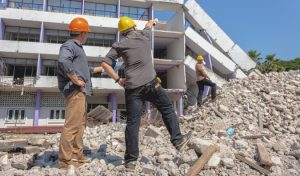 Construction disaster recovery and rebuilding is the systematic process of assessing, cleaning, repairing, and reconstructing damaged properties, infrastructure, and communities after a natural or man-made disaster. The key stages and considerations include:
Key Stages of Typical Construction Recovery
- Emergency Response & Stabilization: Securing the site, removing debris, and installing temporary measures like shrink-wrap or tarps to stop further damage.
- Damage Assessment: Inspecting structural integrity and working with insurance adjusters or government agencies to estimate costs.
- Restoration vs. Rebuilding: Repairing salvageable parts of a structure or tearing down severely compromised buildings for a complete structural rebuild.
- Resilient Reconstruction (“Building Back Better”): Constructing properties to higher safety standards—such as using fire-resistant materials or reinforced roofs—to withstand future hazards.
Key Considerations
- Funding and Support: Projects often rely on private property insurance, builder’s risk policies, or government grants from agencies like FEMA.
- Timeline: Minor repairs can begin within days, while full structural reconstruction of a home or facility typically takes anywhere from 6 to 18 months.
Residential Property & Individual Home Disaster Management
In residential disaster recovery, construction managers act as the vital link between displaced homeowners, insurance companies, and field crews to restore homes safely and quickly. The initial response and assessment include securing hazardous sites. Managers deploy emergency structural shoring, tarp damaged roofs, and board up windows to prevent further weather damage or looting. They check the structural integrity by inspecting foundations, framing, and utility connections to determine if a home is safe to enter or salvageable. Managers document insurance evidence by creating comprehensive line-item damage logs, photo portfolios, and repair estimates required by private insurers and FEMA.
|
“During disaster recovery and rebuilding, construction managers lead the assessment, planning, and reconstruction of damaged housing, commercial buildings, and public infrastructure.” |
A logistics and resource management report must be submitted to navigate supply shortages. High-demand materials must be sourced, such as drywall, roofing, and lumber, from unaffected regional markets during widespread material spikes. Hire licensed, insured, local subcontractor tradespeople to protect vulnerable homeowners from predatory, unlicensed “storm chaser” scammers.
Construction managers organize and manage trade schedules dynamically so framing, electrical, plumbing, and drywall move efficiently from house to house during each phase of rebuilding. Managers must work with regulatory compliance and mitigation during each disaster recovery. They must rebuild structures to meet updated local hazard codes, such as wildfire-resistant roofing or hurricane-rated tie-downs. Leaders must meet elevation requirements by overseeing the raising of foundations for homes located in newly remapped, high-risk flood zones. They coordinate municipal fast-track rebuilding permits and schedule mandatory rough-in and final inspections with local city code officials.
Disaster Management For Public Infrastructure And Government Projects
 Before long-term rebuilding can begin, public infrastructure must be stabilized to ensure community safety and allow emergency vehicles to move freely.
- Emergency Debris Clearance: Coordinating the immediate clearing of primary transportation corridors. This includes managing contractors to cut and toss downed trees, clear mudslides, and remove structural hazards from roadways.
- Temporary Infrastructure Restoration: Overseeing the installation of temporary bridges, bypass roads, or backup power configurations for critical public assets, such as hospitals, water pumps, and emergency operations centers.
Once the immediate danger passes, construction managers pivot to formal engineering assessments to secure the massive funding required for public works.
- Project Worksheet (PW) Formulation: Working alongside federal, state, and local inspectors to draft FEMA Project Worksheets. These documents detail the exact scope of work and cost estimates required to restore a facility to its pre-disaster design.
- Hidden Damage Identification: Utilizing specialized testing (such as ground-penetrating radar for bridge scour or non-destructive testing for concrete integrity) to identify deep structural issues caused by flooding or seismic activity that aren’t visible to the naked eye.
Rebuilding public infrastructure requires navigating highly regulated bidding processes under tight timelines.
- Expedited Bidding Protocols: Activating emergency procurement provisions to legally bypass traditional, month-long public bidding cycles while maintaining enough transparency to satisfy government auditors. Professionally managing the influx of massive material orders is critical.
- Prevailing Wage & Labor Compliance: Enforcing federal labor laws, such as the Davis-Bacon Act, which mandates that contractors pay local prevailing wages and benefits on publicly funded projects.
Modern public recovery avoids simply rebuilding to past standards. Construction managers must implement forward-looking designs to withstand the next major event, including:
- FEMA Section 406 Hazard Mitigation: Identifying opportunities to secure extra federal funding specifically for upgrading infrastructure components.
- Code and Standard Upgrades: Ensuring all designs incorporate the most up-to-date building codes, seismic standards, or sea-level rise projections.
- Environmental & Historic Compliance: Navigating complex National Environmental Policy Act (NEPA) clearances and State Historic Preservation Office (SHPO) reviews, which are frequently triggered when public assets like historic courthouses or riverside parks are rebuilt.
Conclusion
Let ITI Technical College open the doors to your future with a Construction Management (AOS) Associate In Occupational Studies Degree. Our program trains you for an entry-level position in the construction industry. Visit our website for more information on how to apply.
Disclosure:
For more information about graduation rates, the median debt of students who completed the program, and other important information, please visit our website: https://iticollege.edu/disclosures/