

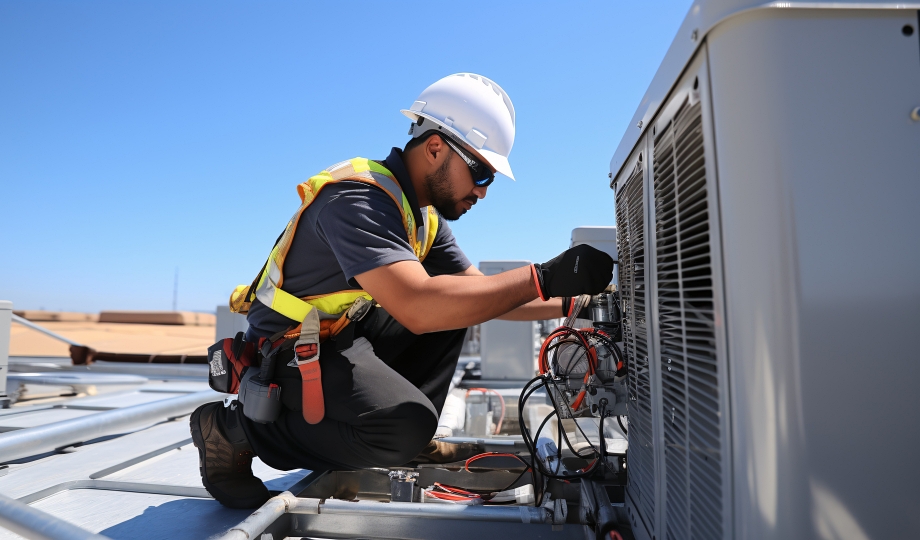
The HVAC industry is shifting from high-GWP (Global Warming Potential) refrigerants like R-410A to lower-GWP A2L mildly flammable alternatives like R-32 and R-454B. This decision is driven by the American Innovation and Manufacturing (AIM) Act of 2020 and Environmental Protection Agency (EPA) regulations. This guide covers the A2L refrigerants HVAC technicians need to understand.
The EPA enforces the AIM Act, which mandates an 85% phasedown of high-potency hydrofluorocarbons (HFCs)—greenhouse gases commonly used in refrigeration, air conditioning, and aerosols—by 2036. New HVAC technicians need to have a working knowledge of the A2L refrigerant shift. Contact ITI Technical College today for more information.
What Changed In The Industry For A2L Refrigerants-HVAC Technicians
Like in any industry, change and new regulations are inevitable. Prospective HVACR students must be trained in the A2L refrigerant shift to comply with state and federal regulations. This is a basic overview of the changes:
- New GWP Limits: The EPA requires a GWP limit of 700 or less for new residential and light commercial air conditioning equipment and heat pumps.
- Refrigerant Classifications:
- A1: Non-flammable, low toxicity (e.g., legacy R-410A with a GWP of ~2,088).
- A2L: Mildly flammable, low toxicity, slow burn velocity (e.g., R-32 with a GWP of ~675, R-454B with a GWP of ~466).
- No Drop-In Replacements: You cannot mix refrigerants or retrofit legacy A1 equipment with A2L refrigerants; systems must be engineered specifically for A2Ls.
- Training & Education: Typical HVAC associate degree programs teach students the knowledge and skills needed to successfully work with this refrigerant shift.
A2L Refrigerants HVAC Technicians Need To Know On The Job
New A2L systems feature built-in factory sensors near evaporator coils. If a leak is detected, the control board runs the indoor fan to circulate air and disperse the refrigerant. Technicians must use dedicated, A2L-rated, spark-free recovery machines, vacuum pumps, certified tools, and electronic leak detectors to prevent ignition of mild flames. Learn which basics belong in your bag in HVAC tools every graduate should own before their first job.
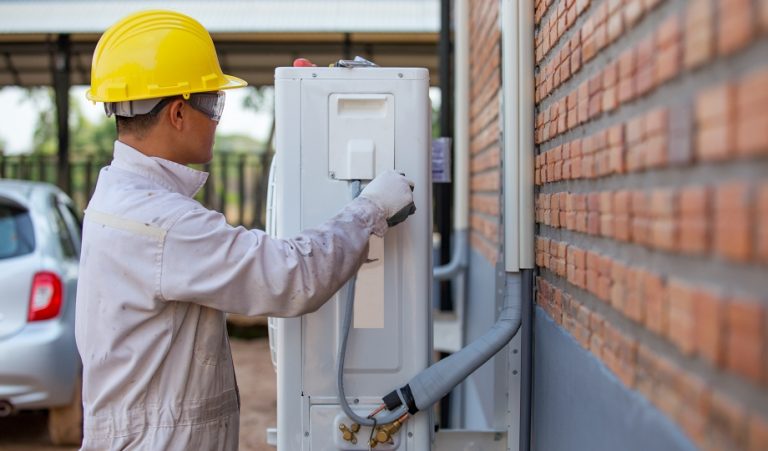 New HVAC technicians must use the correct brazing and charging procedures. Strict adherence to pressure testing, careful evacuation sequencing, and leak checks at every stage are mandatory rather than optional best practices. Vehicle transport limits apply (DOT generally allows up to 440 lbs of combined A1 and A2L refrigerant per vehicle without placarding), and storage must comply with updated fire and building codes (such as ASHRAE Standard 15 and UL 60335-2-40).
Your current EPA Section 608 Certification card remains valid, though supplemental safety training (such as through the ESCO Institute or manufacturer-specific programs) is strongly recommended.
“New HVAC Technicians need to have a working knowledge of the A2L Refrigerant Shift.” |
A2L Refrigerants: Commercial And Industrial Applications
New commercial and industrial applications of A2L (mildly flammable, low GWP) refrigerants are expanding rapidly due to federal mandates. They include the U.S. AIM Act, updated safety standards (ASHRAE 15, UL 60335-2-89), and 2024 International Mechanical/Building Codes, as outlined in the ICC’s update on EPA’s Technology Transitions Program and A2L refrigerants. Grocery stores rely on these systems, and you can see how grocery chains and cold chain logistics use HVAC technicians.
- Medium-Temperature Commercial Refrigeration: Use R-454C (GWP ~148) in supermarket cases, walk-in coolers, and condensing units to replace legacy high-GWP refrigerants like R-404A.
- Low-Temperature Commercial Refrigeration: Use R-455A (GWP ~148) for frozen food storage, ice cream displays, and industrial cold-storage distribution facilities.
- Outdoor Distributed A2L Systems: Integrated full-store and rack solutions (such as those offered by Hussmann) featuring compressorized units, evaporators, and condensers engineered specifically for outdoor placement.
- Glycol and Chiller Platforms: Standardized A2L integration in industrial and craft-beverage process cooling (such as G&D Chillers) to handle process loads while separating the refrigerant loop from indoor spaces.
- Light Commercial & HVAC Heat Pumps: Broader adoption of R-454B (GWP ~466) and R-32 (GWP ~675) for rooftop units, split systems, and light commercial air conditioning.
Mandatory System Requirements for New Applications
Because A2L refrigerants are mildly flammable, new or full-replacement installations require built-in safety infrastructure:
- Refrigerant Detection Systems (RDS): Fixed sensors (such as MSA Bacharach or integrated UL-compliant controls) set to trip and alert at a small fraction of the Lower Flammability Limit (LFL). For example, UL 60335-2-40 sets the response point at 25% of the LFL.
- Automatic Mitigation: Systems automatically shut off compressors, trigger alarm strobes, and run evaporator or exhaust fans to disperse any leaked gas upon detection.
- Mechanical Adjustments: Enhanced ventilation, specialized A2L-rated filter driers, ball valves, and proper charge-limit management.
Earn Your Degree And Go To Work
An Air Conditioning, Refrigeration, & Electrical Technology (AOS) Associate In Occupational Studies Degree will provide the all-around training you need for an entry-level position. Graduates are equipped with the job search and job skills to succeed in their positions. Not sure which trade is right for you? Compare HVAC and electrical technology programs.
ITI Technical College has graduated thousands of technical students since 1973. We help students see the vision of their chosen careers and prepare them with the technical and soft skills they need to work for HVACR companies, including the A2L refrigerants HVAC technicians handle every day. We are an institution dedicated to helping our students have a better life. Request more information about our college and its Air Conditioning, Refrigeration, & Electrical Technology (AOS) Associate In Occupational Studies Degree HVAC technician training program.
Disclosure:
For more information about graduation rates, the median debt of students who completed the program, and other important information, please visit our website: https://iticollege.edu/disclosures/