

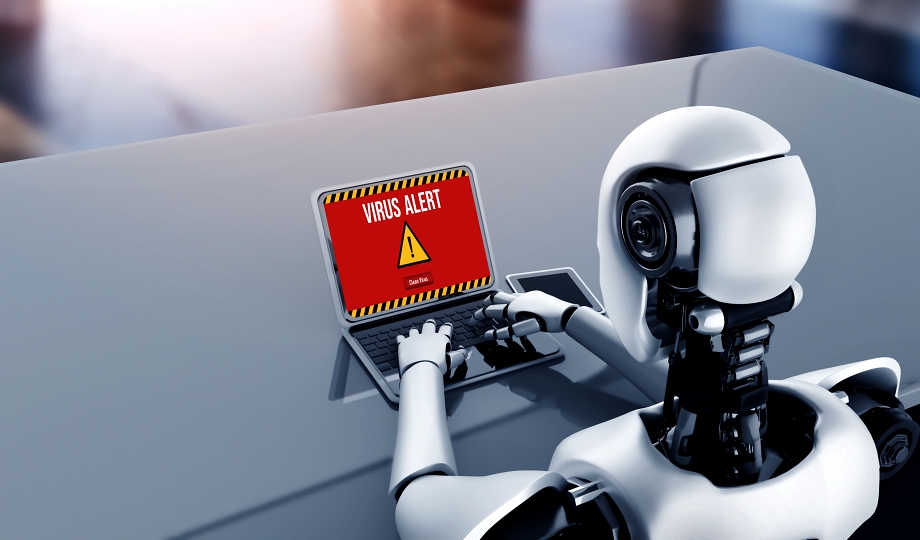
AI and hackers are increasingly shaping the cybersecurity landscape. While artificial intelligence can help security teams detect threats, analyze large amounts of data, identify unusual patterns, and respond faster to attacks, it is not a complete solution on its own. AI works best as a powerful tool that supports cybersecurity professionals in defending systems against increasingly sophisticated threats.
Artificial intelligence stops hackers by finding hidden patterns, blocking threats instantly, and automating defense tasks. Key methods include behavioral analytics, automated response, and threat intelligence. Well-trained Information Technology employees are in demand to counter cyberattacks. Contact ITI Technical College for more information.
Damage That Hackers Cause Globally
 Global cybercrime causes massive economic destruction, reaching an estimated $10.5 trillion annually, driven heavily by direct financial losses, business downtime, and operational disruption. Tracked insights from Cybercrime Magazine highlight this loss as a historic global transfer of wealth.
- Financial Theft and Fraud: Billions are lost yearly through business email compromise, investment fraud, and ransomware extortion demands.
- Operational Downtime: Organizations face severe workflow halts, lost employee productivity, and delayed supply chains after a breach.
- Recovery and Defense Costs: Companies spend vast amounts on forensic investigations, data restoration, and ramping up everyday security budgets.
- Critical Infrastructure: Attacks on healthcare networks, energy grids, and transport hubs endanger public safety and delay basic services.
- Data and Privacy Loss: Stolen personal records, medical histories, and credentials expose millions of people to identity theft.
Major Examples Of Cybercrime
Recent major examples of cybercrime include the Stryker Microsoft Systems disruption, the UNFI Wholesale Food supply attack, and global phishing-as-a-service expansions. In March 2026, an Iranian-linked group, Handala, hit Microsoft Systems at medical device maker Stryker, triggering simultaneous factory resets on over 200,000 corporate devices across 79 countries and halting production and shipping.
UNFI Grocery Wholesale suffered electronic system disruptions and failures that severely impacted order processing and led to regional grocery inventory shortages. Fairlife Milk brand was forced to temporarily pause key U.S. production lines in June 2026 after a targeted breach compromised internal operational networks.
Organizations must constantly be aware of emerging threat tactics. In May 2026, cybercriminals widely deployed new phishing-as-a-service frameworks designed to intercept and hijack Microsoft 365 access tokens, bypassing standard multi-factor checkpoints. This year, federal law enforcement reported a surge in sophisticated cyberstalking and extortion cases involving custom artificial intelligence tools used to generate synthetic imagery and fraudulent corporate profiles.
|
“Artificial intelligence can help stop hackers, but it is not a complete solution on its own.” |
How AI Defends Against Hackers
AI works with advanced cybersecurity measures to stop hackers from stealing data, disrupting network functionality, extorting money, and shutting down organizations. AI security analysts use generative AI cybersecurity in these ways:
- Behavioral Analytics: Learns normal user and system activity to flag unusual activity, such as sudden file encryption, to protect network security.
- Real-Time Detection: Scans network traffic instantly to catch strange behavior or malware before damage occurs with a vulnerability assessment. Spots zero-day flaws instantly without waiting for traditional signature updates.
 Automated Responses: Isolates infected devices and blocks malicious network traffic the moment a threat is identified. Speeds up how fast security teams find and block active threats, reducing response time from hours to minutes.
- Pattern Recognition: Flags hidden risks by looking through millions of system events faster than any human.
- Early Warnings: Screens suspicious emails or code for red flags to prevent human error with advanced cyber threat detection.
AI And Hackers: Why AI Cannot Work Alone
AI cannot act alone to stop hackers because it lacks real-world contextual judgment, cannot fix foundational human and system errors, and is vulnerable to adversarial manipulation.
- Hackers Use AI Too: Bad actors use artificial intelligence to write better phishing messages, scale attacks, and find software holes faster.
- Human Oversight Needed: Every computer system is set up differently, meaning human experts are still required to understand unique organizational flaws and direct the technology.
- Data Limits: AI models can make mistakes or miss threats if they are fed bad data or lack proper safety rules.
There are core limitations of AI in cybersecurity, such as concept blindness. AI relies on known patterns and signatures, making it struggle with novel zero-day exploits or understanding the true intent behind complex user behavior. System and human vulnerabilities exist because AI cannot physically patch unmaintained servers, stop users from falling for phishing scams, or fix over-permissioned access tokens on its own.
Adversarial exploitation lets hackers trick or poison AI mode with misleading inputs, causing the algorithms to miss threats or flood human operators with false alarms. With operational liability on platforms like Facebook, opinions are mixed regarding AI’s raw capability. Experts agree that AI handles processing speed rather than final legal or operational liability, requiring mandatory human oversight.
In Conclusion
Today’s information technology specialists use cybersecurity and AI to detect and combat hackers. Learn how to prepare for a career in this industry by earning an Information Technology (AOS) Associate in Occupational Studies Degree with the Cybersecurity and Artificial Intelligence Specialization. It’s easy – just request more information to see what ITI Technical College has to offer.
Disclosure:
For more information about graduation rates, the median debt of students who completed the program, and other important information, please visit our website: https://iticollege.edu/disclosures/