

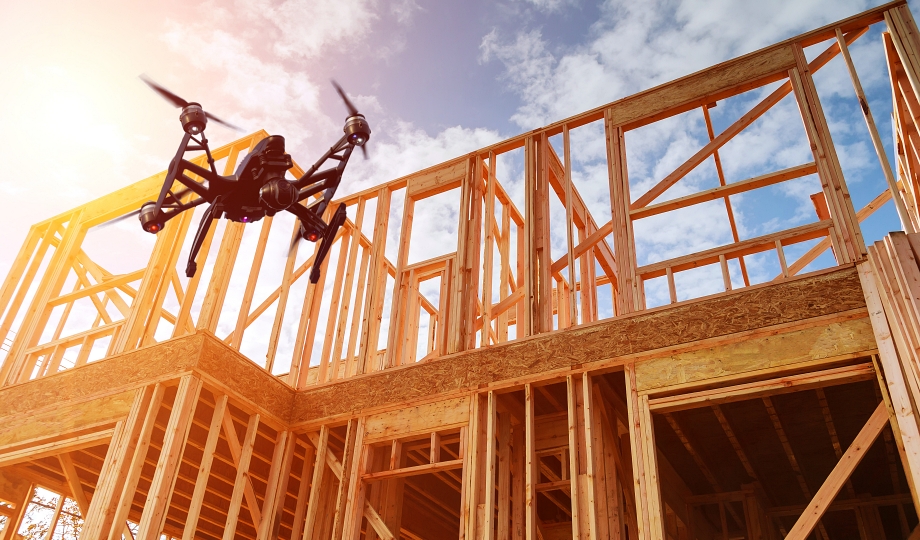
Drones are transforming residential, commercial, and industrial building evaluations by allowing professionals to survey rooftops, large infrastructure, and high-risk work zones remotely using high-resolution and thermal imaging. They are effectively used by HVAC and construction managers to save time, effort, and money, and to promote safety and security. Contact ITI Technical College today for more information.
How Drones Work
A drone is an aircraft that flies without a human pilot on board. They are used in many industries, including HVAC and construction. Here’s how drones work:
- Remote Control: A human operator guides the aircraft using a handheld controller, computer, or phone app.
- Autonomous Flight: Onboard computers, GPS, and sensors allow the craft to follow pre-programmed paths, record observational data, and avoid obstacles.
- UAV vs. UAS: Drone or UAV (Unmanned Aerial Vehicle) means the flying machine itself, while UAS (Unmanned Aircraft System) includes the drone, the controller, and any ground equipment.
Common Uses for Drones
- HVAC and Construction: These professionals survey rooftops, large infrastructure, and high-risk work zones to check performance and project development.
- Recreation and Photography: Hobbyists use small quadcopters to capture aerial photos and videos.
- Agriculture: Farmers check crop health, spray fields with fertilizers, and watch livestock.
- Public Safety: Firefighters and police use them to monitor emergencies, search for missing people, and inspect dangerous areas.
- Commercial and Defense: Companies test them for delivery services, while militaries use them for surveillance and reconnaissance.
Safer and Faster Access With Drone Construction Inspections
 Drones in the construction industry are changing how HVAC and construction professionals perform site assessments. They replace risky manual climbs with fast land surveying and other checks with repeatable aerial data collection. These are common uses in these industries:
- No Ladders or Lifts: Drones inspect high rooftops, tall facades, and complex industrial layouts without requiring scaffolding or boom lifts.
- Reduced Fall Risks: Removing workers from heights reduces major job site injuries and fatalities.
- Quicker Deployment: A roof, wall, multi-level structure, or facade check that used to take days with a manual crew can now be completed in a few hours.
- Land Surveying: A drone can capture a continuous land surface across the whole site, including the parts nobody wants to walk on.
- Materials and Equipment: These flying gadgets can inspect and report on material stockpiles and equipment.
- Environmental Tracking: Drones can check the environment for mishaps, such as spills, pollution, or flooding.
- Safety Inspections: Scaffolding is checked without anyone climbing the structure. Crane masts in high wind can be evaluated.
- Security Surveillance: The project can be surveyed for intrusion by unwanted people.
|
“Drones are transforming residential, commercial, and industrial building evaluations by allowing professionals to survey rooftops, large infrastructure, and high-risk work zones remotely using high-resolution and thermal imaging.” |
Drone Construction Inspections Provide Better Project Tracking
Drone construction inspections give construction managers real-time, high-resolution aerial data to track job progress, spot schedule delays, and compare actual site work against architectural blueprints. They provide real-time progress monitoring in many ways. Managers can make precise measurements with laser range finders and LiDAR mapping to help generate exact 3D models and digital twins of active construction zones. They create repeatable routes where GPS and RTK technology let operators fly the exact same path months later to measure changes or track asset degradation over time.
Construction managers use drones to capture regular overhead photos and videos of the job site. This steady stream of data helps teams watch work move forward day by day. They can compare current work to past phases, such as last week or last month. Inspectors can spot bottlenecks or missing materials before they cause costly delays. Managers appreciate sharing clear visual proof with off-site owners and lenders with drone technology.
Advanced Imaging and Diagnostics With Drone Construction Inspections
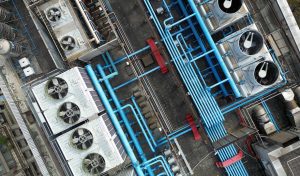 Drones use advanced imaging and diagnostics during construction inspections to provide real-time data, high-resolution mapping, structural analysis, and more, including these benefits:
Advanced Imaging Technologies
- RGB Visual Cameras: Capture clear, high-resolution photos and videos to spot surface cracks, rust, or poor workmanship.
- Thermal Infrared Imaging: Detects hidden heat signatures, moisture leaks behind walls, electrical short circuits, missing insulation, or blocked ductwork before units fail.
- LiDAR (Light Detection and Ranging): Uses laser pulses to create exact 3D point clouds and topographical maps of the job site.
- Multispectral Sensors: Monitor vegetation health, soil composition, and environmental changes around the construction zone.
Diagnostic Capabilities
- Photogrammetry: Stitches hundreds of overlapping aerial photos together to accurately determine distances, volumes, and elevations.
- AI-Powered Defect Detection: Automatically flags structural anomalies, alignment errors, and safety hazards from captured footage.
- Progress Tracking: Compares current site imagery against 3D Building Information Modeling (BIM) designs to measure progress.
Benefits for Construction Managers
- Improved Safety: Keeps human inspectors away from dangerous heights, unstable structures, heavy machinery areas, and potential toxic substances.
- Cost and Time Savings: Completes site surveys in hours instead of days, reducing labor costs and project delays.
- Better Documentation: Drone construction inspections create a permanent digital record of every phase of construction for clients and regulatory audits.
ITI Technical College offers an Air Conditioning, Refrigeration, & Electrical Technology (AOS) Associate in Occupational Studies Degree for entry-level HVAC technicians and a Construction Management (AOS) Associate in Occupational Studies Degree for future construction managers. Find out more, and we want to hear from you.
Disclosure:
For more information about graduation rates, the median debt of students who completed the program, and other important information, please visit our website: https://iticollege.edu/disclosures/