

A Certificate in industrial instrumentation can jump-start a manufacturing career by providing specialized skills in installing, maintaining, and calibrating automated systems, which makes you a competitive candidate for entry-level roles like Instrumentation and Control Technicians. This training equips you with the ability to work with critical control systems for temperature, pressure, and flow, and it can open doors to high-demand positions in various manufacturing and processing industries. Contact ITI Technical College today for more information.
A Certificate In Industrial Instrumentation Provides In-Demand Skills
A Certificate provides essential knowledge and in-demand skills for technicians. This valuable job preparation presents graduates with the following training:
- Technical expertise: Learn to install, calibrate, test, and maintain the complex devices that automate industrial processes, ensuring they accurately measure variables like temperature, pressure, level, and flow.
- Diagnostic skills: Become proficient in using diagnostic tools like multimeters, calibrators, and oscilloscopes to troubleshoot and repair equipment.
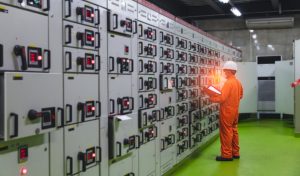 System understanding: Develop the ability to interpret schematics, wiring diagrams, and other technical specifications needed to understand and work on control systems.
- Safety knowledge: Understand and implement the safety and quality standards crucial to industrial processes, as your role is essential for protecting both personnel and the environment.
- Practical, hands-on experience: The training includes interpreting schematics, using diagnostic equipment like multimeters, and performing essential maintenance tasks.
- Job-ready for automation: Automation is increasing in manufacturing, leading to a high demand for qualified workers who can manage these systems.
Open Doors With A Certificate In Industrial Instrumentation
The manufacturing field has a high demand for qualified workers, as industries rely on precise monitoring and control to operate efficiently. A certificate can prepare you for entry-level positions, sometimes starting as an assistant to a professional, with the potential to advance with experience. A Certificate education qualifies you for jobs in a wide range of sectors, including aerospace, automotive, chemical, food and beverage, energy, and many more.
|
“A certificate in industrial instrumentation can jump-start a manufacturing career by providing specialized skills in installing, maintaining, and calibrating automated systems.” |
Enhance Your Job And Career Prospects With Certificate Training
A technician’s career prospects are enhanced by earning a certificate from a technical college in industrial instrumentation. Graduates have these advantages:
- Increased employability: An earned Certificate makes you a more attractive and competitive candidate to employers compared to those with just a high school diploma. Certificate training differentiates you from other candidates by verifying your specialized knowledge and skills, demonstrating your ambition to employers.
- Higher earning potential: Certificates can qualify you for new roles within your current company or provide a path to a career change.
- Path to advancement: It provides a foundation for long-term growth. With experience and further education, you can move into advanced roles, such as a lead technician, supervisor, or management position.
- Improve job security: Staying relevant is crucial in a rapidly changing workforce. Your Certificate credits can be applied to an Associate of Occupational Studies (AOS) Degree, help you stay competitive, and can lead to greater career stability.
- Boost credibility and expertise: Earning a Certificate proves your commitment to your field and builds your credibility with employers and colleagues.
- Expand your professional network: Many Certificate programs connect you with a community of experts and other professionals in your field.
What You Will Learn In A Certificate Program
Graduates jump-start their careers in manufacturing instrumentation with the knowledge and skills they gain in Certificate programs and become valuable assets to their employers. The ITI Technical College “program prepares individuals to apply basic engineering principles and technical skills in support of engineers engaged in developing control and measurement systems and procedures.” It includes instruction in:
- Instrumentation design and maintenance
- Calibration of instruments
- Design and production testing, and scheduling
- Automated equipment functions
- Applications to specific industrial tasks
- Report preparation and documentation
- Introductory course to PCs – Microsoft Office and Excel
The Industrial Instrumentation Certificate Program begins with a Success Skills course that includes study skills, job interviewing, resume writing, and job search training. A review of Basic Mathematics, Basic Electricity, and Electronics follows.
Students proceed with Industrial Instrumentation subjects of basic Pressure and Level Instrumentation while also completing courses in Instrumentation Electronics. Industrial Electricity for Instrumentation is covered in Motor Controls and Relay Logic as well as Programmable Logic Control (PLC) Basics.
Students then proceed through Technical Mathematics and Instrumentation basic principle courses of Temperature, Hydraulics, Flow, Analytical, Valves, and Final Control Elements, Documentation, and Process Control Theory.”
Your success in graduating from the Certificate Program in Industrial Instrumentation is our success. Find out now how you can obtain your Certificate.
For more information about graduation rates, the median debt of students who completed the program, and other important information, please visit our website: https://iticollege.edu/disclosures/