
Are you interested in a career in instrumentation or automation? Automation generally has a broader, faster-growing job market, while Instrument and Control Systems (ICS) offers stable roles, particularly in manufacturing and process maintenance. Both occupations are critical in the production of products and services in our economy. Technicians in both occupations are essential for keeping many different industries running efficiently and safely. Contact ITI Technical College for more information.
Instrumentation And Automation: Key Job Market Differences
Instrumentation/Control Systems and Automation are related fields of work but differ in processing controls. The following helps explain their job market differences:
 Automation Jobs: Focus is on system integration, software, and robotics, often seen in many different types of industries, not just manufacturing and processing, with more rapid growth as industries digitize.
- Instrument and Control Systems (I&C) Jobs: Focus is on physical instruments (sensors, valves) and control loops (PLC/DCS). These positions are critical for maintenance and troubleshooting in production environments, with steady, long-term demand, as highlighted by ITI Technical College.
- Future Growth: Both fields are growing, and as AI is adopted, I&C technician demand is expected to see steady growth, while a massive shift toward automation technologies grows jobs across many sectors.
Which Should You Choose – Instrumentation Or Automation?
Choosing a career is not always an easy decision to make. Choose Automation if you are interested in software, programming, system-wide integration, and robotics in a wide field of industries. Choose Instrumentation if you prefer hands-on work with hardware, field devices, and troubleshooting in manufacturing and processing work.
A mechatronics technician approach, which combines mechanics, electronics, and control systems, might provide the best of both worlds. You create and use smart, automated, and efficient technologies in manufacturing and processing facilities.
|
“Automation generally has a broader, faster-growing job market, while Instrument and Control Systems (ICS) offers high-demand, stable roles, particularly in manufacturing and processing maintenance.” |
Salary And Demand For Both Careers
The salary and demand for both careers are promising for graduates of associate degree programs.
- Automation Technician: According to the Bureau of Labor Statistics (BLS), entry-level technicians typically earn $42,000 annually, while experienced technicians earn up to $71,000 or more annually.
- Instrument Technician: According to the BLS, entry-level positions generally start around $43,000 to $55,000, while experienced professionals can earn more than $75,000.
- Demand: The BLS reports that jobs for instrument and control systems technicians are projected to see 1% growth from 2024-2026. Jobs for automation technicians are projected to grow 1% to 5% during this same period.
Instrumentation And Control Systems Technology Training
The objective of this associate degree program is to prepare students to install, maintain, and troubleshoot equipment in entry-level positions, including:
- Instrument/Electrical Technician
- Instrument Fitter
- Instrumentation Repair Technician
- Instrumentation Maintenance Technician
- Assistant Instrument Designer
- Instrument Sales Representative
- Analyzer Technician
- Analyzer Sales
The Instrument & Control Systems Technology Program teaches basic concepts, skills, and terminology for graduates to obtain entry-level jobs in this occupation. Studies include classroom and laboratory work in these areas:
- Basic Electricity and Electronics
- Success Skills in the Workplace
- Industrial Safety Practices
- Review of Basic and Related Mathematics
- Basic Pressure and Level Instrumentation
- Instrumental Electronics
- Industrial Electricity Instrumentation
- Motor Controls and Relay Logic
- Programmable Logic Control (PLC) Basics
- Temperature, Hydraulics, Flow
- Valves and Final Control Elements
- Documentation and Process Control Theory
- Industrial Measurement and Control
- Advanced PLC Applications
The program also includes introductory courses in PCs such as Microsoft Office, Excel, Networking, and Technical Writing software. In the last two quarters of study, students choose specialized training in control systems or process analyzers. The analyzer track includes Basic and Organic Chemistry and Analytical Measuring Devices. The Controls track offers additional control systems courses. Each track includes elective choices for students to tailor their training.
Automation And Electronic Systems Technology Training
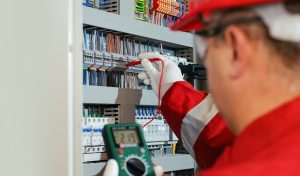 The objective of this associate degree program is to prepare students to work in entry-level positions in industrial and commercial electronic applications. Graduates will be capable of installing, maintaining, and troubleshooting basic electronic equipment and systems in entry-level positions, including:
- Industrial Control System Technician
- Manufacturing Automation Technician
- Remote Operated Vehicle (ROV) System Technician
- Home Automation System Technician
- Alarm System Technician
- Video Monitoring System Technician
- Electronic System Technician
- Medical Equipment Technician
- Communications Equipment Technician
The Automation & Electronic Systems Technology Program is designed to equip graduates with real-world skills in analog and digital electronics with a focus on microprocessor control. Studies include classroom and laboratory work in these areas:
- Digital Multimeters (DMMs), Oscilloscopes, Functional Generators, and Logic Probes
- Introductory and Advanced Programmable Logic Controllers (PLCs) as they apply to industrial control and motor control
- Low Voltage and Fiber Terminations, Introductory and Applied Microprocessors (,uP)
- Introductory Microprocessor training where students build their own microprocessor trainer as they learn microprocessor architecture and basic I/O systems
- Applied Microprocessor training uses the Arduino* platform to allow students to design and construct a final control project of their choosing.
- Basic computer applications and applied technical writing
A basic networking course will introduce students to the equipment and concepts used in setting up a basic computer network. Elective course choices include instrumentation courses covering the basics of flow, level, temperature, and pressure. Information Technology courses such as software applications, network security, web design, and A+ certification are offered.
Both training programs are available at ITI Technical College. Request information about them and prepare for a better future.
Disclosure:
For more information about graduation rates, the median debt of students who completed the program, and other important information, please visit our website: https://iticollege.edu/disclosures/