

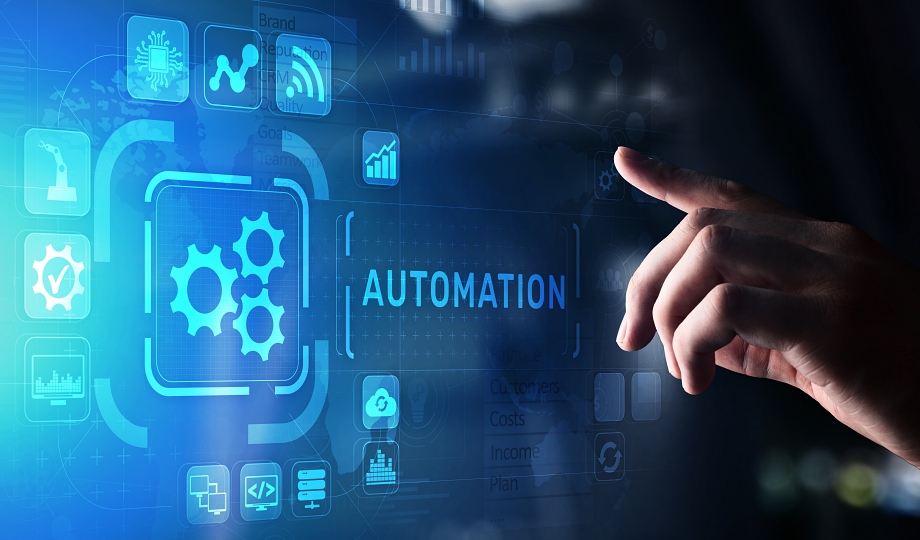
Automation Shaping Modern Industry by improving efficiency, quality, and safety through robotics, PLCs, and AI—enabling continuous operations and lowering costs. Entering this field requires technical training in electronics, PLCs, robotics, and system integration, preparing you for roles as technicians, electricians, and maintenance specialists across manufacturing, logistics, and other industries. Contact ITI Technical College today for more information.
Automation Shaping Modern Industry
Automation & electronic systems technology play a huge role in shaping modern industry. Its importance cannot be understated because the future depends on advanced automation and artificial intelligence practices. These advantages outline its significance:
- Increased Productivity & Efficiency: Automates repetitive tasks, enabling faster, continuous, and more pr
 ecise production (e.g., assembly, material handling, shipping).
- Enhanced Quality & Consistency: Reduces human error with high-accuracy control (sensors, actuators) for uniform, high-standard products.
- Improved Safety: Removes humans from dangerous and smelly tasks (hazardous materials, heavy lifting) and uses safety systems for compliance.
- Cost Reduction: Lowers labor, waste, material, and operational costs over time.
- Supply Chain Optimization: Real-time tracking, automated inventory (robots, drones), and streamlined logistics.
- Data-Driven Decisions: Provides real-time monitoring and feedback for better process control.
- Innovation: Powers AI diagnostics, personalized products, and smart, self-healing platforms.
Industries Most Reliant On Automation & Electronic Systems Technology
Industries most reliant on automation and electronics include Manufacturing (especially automotive), Healthcare, Finance, Logistics/Supply Chain, Retail, and Agriculture. They use robotics, AI, sensors for production, diagnosis, transactions, tracking, inventory, and precision farming, driving efficiency, accuracy, and safety across these sectors. Key industries include:
- Manufacturing (Automotive, Electronics, General): Robots for assembly, painting, welding; automated quality control, supply chain management, and inventory.
- Healthcare: Robotic surgery for precision, electronic health records (EHR), automated labs, AI for diagnostics, mHealth, and telemedicine.
- Finance & Banking: RegTech (Regulatory Tech) for compliance, AI for fraud detection, automated trading, and risk monitoring.
- Logistics & Supply Chain: Warehouse robotics, automated sorting, route optimization, drone delivery, and electronic tracking.
- Retail: Automated warehouses, online shopping platforms, robotic inventory management, and self-checkout systems.
- Agriculture (AgriTech): Automated irrigation, robotic harvesting, precision farming with sensors, and drone monitoring.
- Energy & Utilities: Smart grids, automated monitoring, robotic inspection, and control systems for water treatment.
- Transportation (Aviation, Automotive): Autopilot systems, automated vehicle manufacturing, electronic control units (ECUs), and public transit optimization.
|
“Automation & Electronic Systems Technology (AEST) drives modern industry by boosting efficiency, quality, and safety through robotics, PLCs, and AI, enabling 24/7 operations and reducing costs.” |
What Does The Future Hold For Automation & Electronic Systems Technology
The future of automation and electronic systems involves deeper AI/ML integration, creating truly autonomous systems for predictive maintenance and complex tasks, driven by faster connectivity (5G) and IoT. These technologies will lead to smarter factories, self-driving vehicles, smart businesses and offices, and intelligent homes. These advances require a workforce skilled in the design, optimization, and maintenance of complex, interconnected digital-physical environments to increase efficiency, quality, and enable new capabilities. The key trends shaping the future include:
- Smarter AI & Machine Learning (ML): Systems will move from reactive to proactive, predicting issues, making real-time decisions, and optimizing processes without human input.
- Hyperautomation: Combining AI, ML, RPA, and other tools for end-to-end automation of complex business processes, enhancing productivity and reducing errors.
- Ubiquitous Connectivity (IoT & 5G): The Internet of Things (IoT) will connect more devices, while 5G enables lightning-fast communication for seamless, real-time control and data exchange in smart cities, factories, and vehicles.
- Autonomous Systems: Expect more self-driving vehicles, drones, and robotic systems across logistics, manufacturing, and even healthcare, to handle dangerous or repetitive tasks.
- Human-Machine Collaboration: Augmented Reality (AR) will provide visual guidance for technicians, and AI assistants will streamline personal tasks, enhancing human potential rather than replacing it entirely.
- Intelligent Buildings & Homes: Smart systems will manage energy, security, and comfort autonomously, adapting to occupants’ needs.
In essence, the future is about creating interconnected, intelligent ecosystems that enhance efficiency, safety, and new possibilities across every sector, demanding adaptability from businesses and workers alike.
How To Get Into Automation & Electronic Systems Careers
 The demand for skills in AI, data science, robotics, and cybersecurity will surge in the evolving workforce. Engineers will focus more on system design, optimization, and integrating disparate technologies. Prospective employees in automation & electronic systems careers need to incorporate these ideas into their plans:
- Education: Pursue technical training or degrees in Automation & Electronic Systems Technology, Industrial Electronics, or related fields.
- Key Skills: Learn Programmable Logic Controllers (PLCs), robotics, sensors, actuators, Human-Machine Interfaces (HMI), and system integration.
- Career Roles: Become an automation & electronic systems technician, maintenance mechanic, electrician, systems analyst, or robotics specialist.
- Focus Areas: Gain expertise in areas like manufacturing, materials processing, logistics, construction, or energy management.
- Continuous Learning: Stay updated on AI, IoT, and software integration to adapt to evolving technology.
Get Into This Career With An Associate Degree
There’s no better way to prepare for your career than earning an Automation & Electronic Systems Technology (AOS) Associate in Occupational Studies Degree at ITI Technical College. This program provides the knowledge and skills needed to pursue entry-level positions in the field. Contact us today for more information.
For more information about graduation rates, the median debt of students who completed the program, and other important information, please visit our website: https://iticollege.edu/disclosures/