


The shipbuilding industry needs Instrument and Control Systems Grads who bridge the gap between abstract engineering theory and practical, ruggedized maritime applications. Specifically, shipbuilders require competencies in marine system integration, harsh-environment sensor calibration, and legacy/digital system modernization to support advanced commercial and naval fleets. Contact ITI Technical College today for more information.
The Shipbuilding Industry In Louisiana
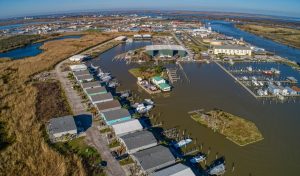 Louisiana’s shipbuilding industry is experiencing a massive renaissance, transitioning from a heavy reliance on the offshore oil and gas market to a high-tech powerhouse focused on federal defense contracts. Autonomous naval vessels, Arctic icebreakers, and aerospace-related maritime infrastructure drive growth. These are the current key industry developments:
- Autonomous Vessels & Sea Drones: Defense tech startup Saronic Technologies is operating a major production hub for autonomous surface vessels (ASVs). The company is completing a massive $300 million expansion at its Franklin shipyard to scale up production of its 150-foot Marauder drone ships.
- Next-Generation Shipyards: Saronic opened a downtown office in New Orleans to expand its operational footprint and announced plans for “Port Alpha,” a greenfield, multibillion-dollar next-generation shipyard to support long-term, large-scale autonomous mass production.
- Icebreakers & Military Manufacturing: Bollinger Shipyards, headquartered in Lockport, secured a major, multibillion-dollar defense contract to construct the U.S. Coast Guard’s fleet of Arctic Security Cutters.
- Aerospace Integration: Traditional shipyards like Bollinger are diversifying by fabricating non-traditional marine assets, such as converted barges designed to serve as landing platforms for commercial aerospace ventures.
Workforce And Economic Impact
The recent influx of government and tech investments has created thousands of jobs, with Saronic alone expected to add about 1,500 skilled roles in the state’s Bayou Region. Each shipbuilding project needs well-trained instrumentation and control systems grads to design and monitor manufacturing and processing systems.
Workforce Development: Companies are increasingly partnering with state institutions to build out localized talent pipelines to help train the next generation of welders, instrument technicians, control systems technicians, and maritime engineers. For more information on these projects, you can explore updates from Louisiana Economic Development or check out coverage from industry publications like WorkBoat. Students who want to work in automation in the Gulf Coast shipbuilding industry should seek training in a Louisiana automation school.
|
“The shipbuilding industry needs Instrument and Control Systems (I&C) graduates who bridge the gap between abstract engineering theory and practical, ruggedized maritime applications.” |
Core Industry Needs
To thrive in naval or commercial maritime manufacturing, Instrument and Control Systems (I&CS) graduates are expected to bring a specific blend of technical capabilities:
- Harsh-Environment Ruggedization: Graduates must understand how sensors and control architectures perform under extreme vibration, saltwater corrosion, electromagnetic interference (EMI), and shock.
- Maritime System Integration: The ability to interface modern programmable logic controllers (PLCs), distributed control systems (DCS), and SCADA networks with massive legacy mechanical, propulsion, and auxiliary systems.
- Network & Cybersecurity: Modern surface vessels and submarines heavily rely on integrated, autonomous networks. Grads need foundational knowledge of shipboard Ethernet and cybersecurity protocols to protect these mission-critical systems.
- Calibration and Metrology: Strict adherence to maritime and defense standards for calibrating pressure, flow, temperature, and level sensors.
- Safety and Regulatory Compliance: Familiarity with strict international maritime regulations (e.g., from the IMO) and military specifications (MIL-SPEC) governing vessel safety.
Recommended Tools And Standards
To hit the ground running in a shipyard, students should have hands-on familiarity with the industry’s standard toolsets and design paradigms. Programming and logic knowledge and skills include Ladder Logic, C++, Python, and IEC 61131-3 standard programming for PLCs.
For simulation and design, students need to have a working knowledge of MATLAB, Simulink, and LabVIEW for designing and testing control algorithms before hardware implementation. Networking skills include proficiency in industrial communication protocols (e.g., Modbus, CAN bus, Profibus).
Where To Train And Apply For Jobs
 The maritime industry—facing a significant workforce shift—heavily recruits I&CS technicians and engineering graduates for stable, high-demand design and production roles.
- Earn an Associate Degree: An industry-worthy degree is an Instrument & Control Systems Technology (AOS) Associate in Occupational Studies Degree.
- Naval Sea Systems Command (NAVSEA): Actively recruits entry-level I&CS technicians and engineers for surface ship and submarine design. Explore career options on the NAVSEA Engineering Jobs portal.
- Private Defense Contractors: Companies like Huntington Ingalls Industries (HII) and General Dynamics Electric Boat are major employers in this space. Look for maritime electrical and control postings via platforms, such as the Orion Talent Naval Submarine & Shipbuilding Careers page. All these companies need technicians trained well in automation systems technology.
We hope this information has provided an introduction to what shipbuilding needs from Instrument and control system grads. Prepare yourself for entry-level work with an Instrument & Control Systems Technology (AOS) Associate in Occupational Studies Degree from ITI Technical College in Baton Rouge.
Disclosure:
For more information about graduation rates, the median debt of students who completed the program, and other important information, please visit our website: https://iticollege.edu/disclosures/