

Cloud computing has been adopted by many organizations and industries to provide a competitive advantage. This service provides more efficiency and a scalable platform for security, creativity, and innovation.
IT professionals are adding this technology to their list of skills to enhance their organization’s productivity and their marketability. They are helping shape the future of digital data service and storage. Employees also use cloud computing to enhance cybersecurity measures. Contact ITI Technical College today for more information.
What Is Cloud Computing
Simply put, a cloud is an internet data center to access data and programs rather than using your computer’s hard drive. Cloud computing also offers users the advantage of enjoying elastic resources that can be scaled up or down to meet current needs. The computing resources that can be commonly accessed include:
- Analytics
- Databases
- Networking
- Servers
- Software
- Storage
Cloud service companies typically sell a metered package that only charges for what you use. This service is convenient because it allows access to all the services an organization needs with the click of a button. Users do not need to buy, own, and maintain physical data centers and servers because cloud computing allows them to access resources as needed. Users can choose public, private, and hybrid clouds to meet their needs.
Understanding Types Of Clouds
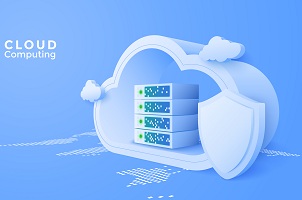 Organizations can choose the type of cloud that helps them perform more effectively and efficiently. Currently, more than 98% of organizations use cloud services to some extent. About 96% of companies use a minimum of one public cloud, and 84% use a minimum of one private cloud. The clouds that are currently available include:
- Public Clouds offer services and infrastructure that are shared by all organizations. They offer a lot of available space and scalability for IT solutions. This is the most popular for small businesses because they operate on a pay-per-use basis.
- Private Clouds are owned by a single organization that can be hosted in-house or externally. It is an expensive model that is well-suited for large organizations that focus on security, customizing, and computing power.
- Hybrid Clouds are a combination of public and private clouds. They combine two models for organizations to create tailored solutions with seamless integration platforms. They are highly secure, flexible, and economical compared to public clouds.
Each cloud platform offers pros and cons, and companies should study them to find the one best suited for their needs.
| This service provides more efficiency and a scalable platform for security, creativity, and innovation. |
Cloud Services You May Use
Once you understand the types of available clouds, you should study the available cloud services that specialize in computer and network needs for all-size businesses. The three common cloud services in use are:
- Software As A Service (SaaS) is a model where providers host software on their servers and users can lease it on a subscription basis
- Platform As A Service (PaaS) models are created to lease the infrastructure needed by companies for complete application life cycles. Development tools, middleware, testing, deployment, database management systems, and maintenance are included in the package.
- Infrastructure As A Service (IssS) models provide an on-demand infrastructure instead of a conventional data center. Businesses can run their workloads in the cloud.
Enhancing Cybersecurity Measures With Clouds
 Businesses like using clouds because they enhance the cybersecurity of their data. Small businesses especially like the extra security with its affordable costs. Cloud security offers many useful advantages, including automation capabilities that speed up and simplify security operations, and faster threat detection, response, and remediation. Here are some security pros:
- They better address more sophisticated threats and complex digital challenges
- They respond with a “never trust, always verify” principle that verifies identities and device security before granting access to anything
- Clouds integrate artificial intelligence (AI) and machine learning (ML) into the system
- AI and ML algorithms can better detect potential threats in real-time
- Clouds augment human capabilities that produce more efficient performances
- Clouds facilitate centralized control over authorized user access
Organizations of all styles and missions more clearly see the need for enhancing security measures, and cloud computing is one of the best ways to accomplish them.
Where To Learn About Cloud Computing And Cybersecurity
A great way to improve your current information technology and cybersecurity skills or earn a college education is by enrolling in our Associate of Occupational Studies (AOS) Degree in Information Technology. It is the ideal training to find an entry-level job in this career. Explore our application process and contact us soon!
For more information about graduation rates, the median debt of students who completed the program, and other important information, please visit our website: https://iticollege.edu/disclosures/