

Mike Rowe has a way of making a complicated problem sound simple.
“For every five skilled workers who retire, two come in,” he wrote back in 2024. “It’s been that way for a while, and the math is not sustainable.”
He’s right that it’s not sustainable. But here’s the part that doesn’t get said enough: an unsustainable shortage for the industry is an open door for the person willing to walk through it.
The Math Isn’t An Opinion
 You don’t have to take Rowe’s word for it. The federal numbers say the same thing.
The Bureau of Labor Statistics projects roughly 81,000 electrician openings every year through 2034, with the field growing 9% — about three times the average for all jobs. A large share of those openings exist for one reason: the people currently doing the work are leaving it, many of them retiring.
Industrial maintenance is moving even faster. Industrial machinery mechanics, maintenance workers, and millwrights are projected to grow 13% through 2034, with about 54,200 openings a year. Same story underneath the number — experienced workers aging out, not enough new ones coming in.
Electricians keep the power on. Industrial maintenance techs keep factories running. Instrumentation and control techs run the processes behind modern manufacturing. HVAC pros keep hospitals, homes, and businesses livable. This isn’t abstract “economy” talk. It’s the stuff that stops working when nobody knows how to fix it.
Why This Generation Is Entering At The Right Time
For a long time, the advice was one-size-fits-all: get a four-year degree, figure the rest out later. That advice made sense in a different labor market.
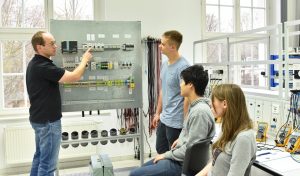 What’s changed is the leverage. When a field has both steady demand and a wave of retirements creating openings, employers aren’t just hoping for applicants — they need them. That’s a different position from which to start a career than most people realize.
The catch is timing. The knowledge walking out the door is decades of hands-on experience, and it doesn’t transfer automatically. Someone has to be trained to catch it before it’s gone. That’s the whole reason technical colleges, apprenticeships, and hands-on programs matter more right now than they did a generation ago.
The Real Question
The question used to be “are there even jobs out there?” That’s not the question anymore. The jobs are there, and the retirements guarantee more are coming.
The real question is whether enough people will have the skills to fill them.
If five workers retire and only two step in, the three who show up trained aren’t just taking jobs. They’re filling a gap the country can’t afford to leave open.
That’s the opportunity — to learn a skill that’s actually needed, in an industry where the people ahead of you are heading for the exit, building a career around work the economy simply can’t do without.
At ITI Technical College in Baton Rouge, that’s the whole point. Programs in Electrical Technology, Air Conditioning & Refrigeration, Process Technology, Instrument & Control Systems, Automation & Electronic Systems, Construction Management, Drafting & Design, and Information Technology all aim at the same thing: getting people trained and into the field while the demand is this strong. Contact us for more information.
The workers are retiring either way. The only open question is who’s ready to take their place.
Disclosure:
For more information about graduation rates, the median debt of students who completed the program, and other important information, please visit our website: https://iticollege.edu/disclosures/