
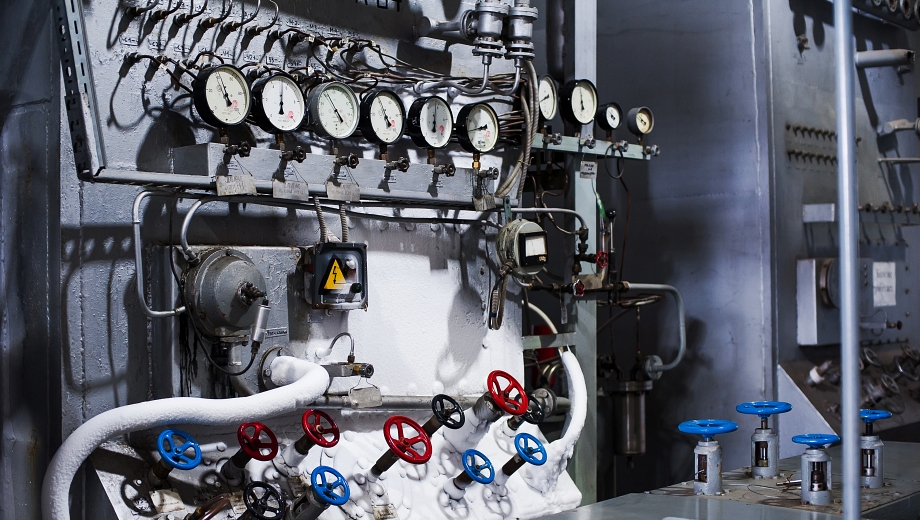
An instrument calibration technician tests, adjusts, and repairs precision measuring tools and systems to ensure they work accurately and meet industry standards. Jobs in this industry are available for those with the proper training and education. The best preparation for this position is earning an associate degree in Instrument & Control Systems Technology AOS. Contact ITI Technical College today for more information.
Education And Training For An Instrument Calibration Technician
Education and training for this position is available in technical colleges and trade schools. Obtaining an associate degree is faster and less expensive than obtaining a bachelor’s degree in this field. See what an Instrument and Control Systems Technology AOS program offers you. Prospective employees need the following for success in the job:
- High School Diploma: Entry-level jobs require a high school diploma or GED with strong classes in math, physics, and basic electronics.
- Associate’s Degree: Employers prefer a 2-year associate’s degree in instrumentation, control systems technology, or a related scientific field.
- On-the-Job Training: New hires often train under senior technicians to learn specific tools, safety rules, and standard operating procedures (SOPs).
- Certifications: Voluntary credentials—such as the Certified Calibration Technician (CCT) from the American Society for Quality or certifications from the International Society of Automation—prove your expertise and help you advance.
Essential Skills For An Instrument Calibration Technician
If you are planning a career in instrumentation calibration, you need several specific skills and adequate knowledge for success. You need technical proficiency, such as understanding electrical, mechanical, and pneumatic principles to diagnose and fix instrument errors. Attention to detail is necessary for meticulously recording “as found” and “as left” data measurements to ensure compliance and traceability.
Analytical thinking is a core skill, including interpreting calibration data, calculating measurement uncertainties, and applying basic statistics. Technicians need manual dexterity in safely handling tiny components, fragile sensors, and delicate wiring connectors. A basic knowledge of regulatory compliance is essential, such as knowing quality standards like ISO/IEC 17025 (general requirements for competence of testing and calibration laboratories) and NIST (National Institute of Standards and Technology) traceability rules. Learn about the hidden skills employers value in instrument and control systems technology.
Common Tools Used For This Job
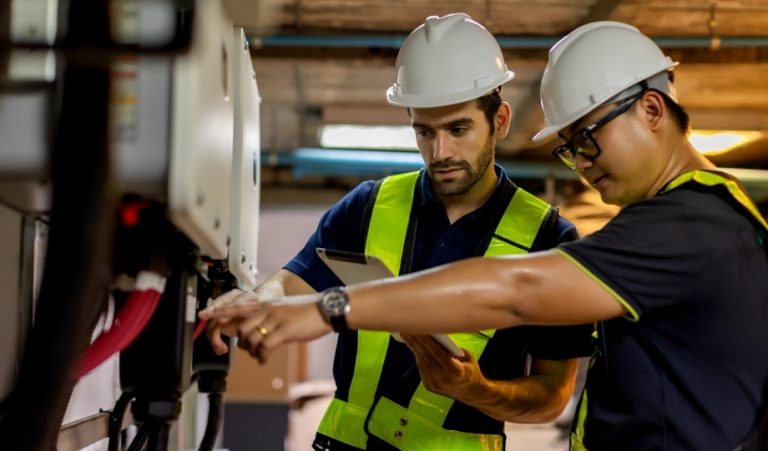 Instrument calibration technicians use essential specialized measurement, simulation, and communication tools to test and adjust industrial field devices, such as:
- Digital Multimeter (DMM): Measures voltage, current, resistance, and continuity to check electrical signals and circuit integrity.
- Multifunction Process Calibrator: Combines multiple testing functions into one device to source and measure voltage, current, resistance, frequency, and pressure.
- HART Communicator: Connects to smart field instruments to configure, calibrate, and diagnose digital and analog 4–20 mA devices, transmitters, and process controls remotely without shutting down a process.
- mA Loop Calibrator: Powers and tests 4–20 mA current loops to verify signal accuracy and loop performance.
- Pressure Hand Pumps & Pneumatic Calibrators: Generate precise test pressures or vacuums to calibrate pressure gauges, transmitters, and switches.
- Temperature Calibrators (Dry-Block & Reference Probes): Simulate or generate accurate thermal conditions to calibrate thermocouples and Resistance Temperature Detectors (RTDs).
- Insulation Resistance Tester (Megger): Tests electrical insulation quality in cables, motors, and transformers to prevent leakage or shorts.
- Calibration Software: Computer management systems used to track equipment history, print labels, and document calibration certificates.
- Reference Standards: High-precision master tools that trace directly back to national standards at NIST.
|
“The best preparation for this position is earning an associate degree in Instrument & Control Systems Technology AOS.” |
Career Outlook For An Instrument Calibration Technician
According to the US Bureau of Labor Statistics, the demand for technicians remains steady across manufacturing, aerospace, biotechnology, energy, and healthcare industries as technology grows more complex. Jobs are projected to grow 5% from 2025 to 2035 (faster than average), with about 1,500 openings each year and a median annual pay of $67,820. Compare job opportunities in instrument and control systems vs. automation.
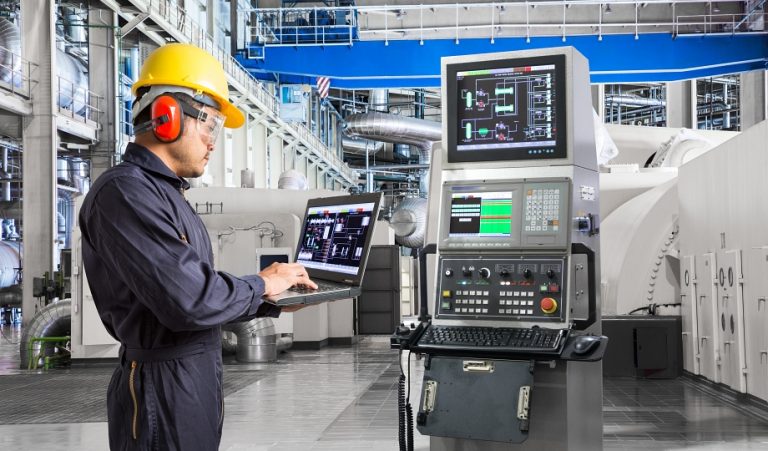 The career path for beginners usually starts with junior technician roles, advances to senior specialist roles over 5 to 10 years, and can eventually pivot into quality assurance management, supervision, or metrology engineering. Instrument Calibration Technician jobs are currently open in major hubs across multiple states, including Salt Lake City and Magna (Utah), Phoenix (Arizona), Redmond (Washington), Horace (North Dakota), and Columbia City (Indiana). Active hiring locations and employers include:
- Salt Lake City, UT
- National Calibration: Hiring for detail-oriented calibration technicians.
- Great Basin Staffing: Offering industrial instrumentation calibration at $36–$46/hr.
- Accredited Labs: Field calibration roles (Utah Scales Center).
- Magna, UT
- Northrop Grumman: Hiring a Calibration Technician 2 with a salary range of $48,400 – $80,600/yr.
- Layton, UT
- KIHOMAC: Hiring Materials Test and Calibration Technicians paying $25 – $30/hr.
- Phoenix, AZ
- Accredited Labs: Openings for standard and field calibration technicians.
- Redmond, WA
- Accredited Labs: Openings for Calibration Technician Supervisors.
- Horace, ND
- Accredited Labs: Field calibration technician openings.
- Columbia City, IN
- Richard J. Bagan, Inc.: Seeking technicians for instrument calibration and repair in their accredited division.
If you are expanding your search, states reporting the highest volume of general calibration technician job activity also include:
- Pennsylvania
- New Jersey
- California
- Texas
- Tennessee
What Instrument Calibration Technicians Do
Instrument calibration technicians test, adjust, and repair gauges, meters, and sensors to ensure they produce accurate and reliable measurements. They test and inspect by comparing tool readings against established reference standards (like NIST-traceable equipment) to verify proper output.
Technicians adjust and repair instruments by fine-tuning or fixing malfunctioning, drifting, or damaged instruments so they operate within safe tolerances. They document data by recording “as found” and “as left” measurements, issue calibration certificates, and label equipment with due dates. Technicians perform preventive maintenance through routine servicing and strict adherence to standard operating procedures (SOPs).
ITI Technical College offers the Instrument & Control Systems Technology (AOS) Associate in Occupational Studies Degree to prepare you for this career. If you are ready to begin your education and training in instrument calibration, explore what ITI Technical College in Baton Rouge has to offer.
Disclosure:
For more information about graduation rates, the median debt of students who completed the program, and other important information, please visit our website: https://iticollege.edu/disclosures/