


FCC punishes custom router firmware by restricting software modifications that could alter radio frequencies and power levels, potentially causing interference with wireless communications and public safety networks. These regulations often require manufacturers to lock router software to maintain compliance with transmission standards. Understanding the difference between manufacturer firmware and custom firmware is important for information technology students studying networking and system security. Contact ITI Technical College today for more information.
Manufacturer Router Firmware Vs. Custom Router Firmware
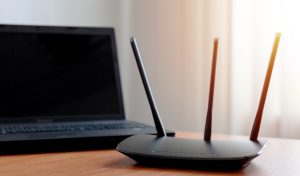 Router firmware is the specialized software that controls the functions of a router, managing data traffic and ensuring network security. It acts as the operating system for your router, enabling it to perform essential tasks, such as managing data flow, configuring network settings, and maintaining security protocols. It is a type of software specifically designed for the hardware of the router, ensuring that all components work together effectively. Unlike regular software applications, firmware is closely tied to the hardware and is not typically user-modifiable.
Key Reasons For The Custom Router Firmware Crackdown
- Preventing Interference: Custom firmware (like DD-WRT) could enable devices to operate on unauthorized frequencies or with too much power, disrupting nearby wireless services.
- Regulatory Compliance: The FCC requires manufacturers to ensure their equipment cannot be easily modified to exceed certified operational limits.
- Hardware Certification: Routers are certified to operate within specific parameters; customized software can bypass these safety controls, causing, for example, “airwaves” congestion.
- Security Concerns: While not the primary motivation, some concerns exist regarding unauthorized modifications. However, the move is largely aimed at protecting the integrity of radio spectrum usage.
| “The Federal Communications Commission (FCC) has cracked down on custom router firmware to prevent users from modifying radio parameters.” |
Why The Crackdown Is Important To College Students
 The FCC’s crackdown on custom router firmware is critical for Information Technology Security students because it limits the ability to modify, patch, and enhance network hardware, impacting security research, open-source development, and practical learning. This shift restricts access to advanced networking features and hinders hands-on experience with customizable, secure network infrastructure. Its significance includes these points:
- Security & Research Impact: The restrictions limit the ability to install open-source firmware (e.g., DD-WRT), which is often used to patch vulnerabilities faster than manufacturers. This limits the ability to study and improve device security.
- Networking Knowledge Limitation: Custom firmware enables learning advanced networking concepts, such as VLANs, advanced traffic shaping, and custom VPNs, which are restricted when routers are “locked down”.
- Reduced Hands-on Experience: The crackdown removes the ability for students to use cheap routers as testbeds for experimenting with networking protocols.
- Regulatory & Technical Shift: The rules force manufacturers to secure RF parameter data, which, if implemented poorly, may permanently block open-source software, removing the ability to optimize or fix bugs in hardware, a key skill for network engineers.
- Operational Control: It forces reliance on vendor-supplied firmware, which often has limited functionality and, in some cases, less frequent security updates compared to community-maintained, open-source alternatives.
Information Security Training Is At Your Disposal
If you live in the Baton Rouge area, information security training is nearby. For 53 years, ITI Technical College has graduated thousands of students with technical program degrees and certificates. Our faculty provides the latest education and training for students seeking an Associate of Occupational Studies (AOS) Degree in Information Technology.
For more, read learn more about router security in information security classes. You can also learn more about this topic in business router vs home router – what is the difference.
Graduates are prepared to work in a wide range of entry-level positions in many different industries. You can be one of them by applying online and meeting with one of our Admissions Advisors. We are here to help you succeed in your career.
For more information about graduation rates, the median debt of students who completed the program, and other important information, please visit our website: https://iticollege.edu/disclosures/