

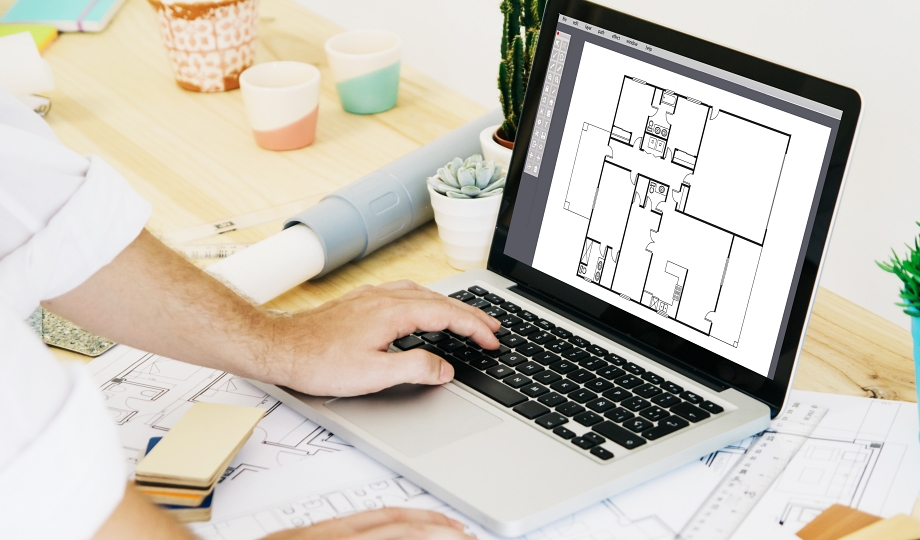
Drafting and design trends are heavily influenced by technology and sustainability, focusing on AI-driven generative design, cloud-based collaboration, and immersive virtual reality and augmented reality (VR/AR). They are used for visualization, alongside a strong push for green building materials, energy efficiency, and biophilic designs.
Drafting And Design Industry Shifts And Market Drivers
The CAD and CADD landscape in 2026 is characterized by a “smarter, faster, and more connected” approach to design, leveraging data and automation to improve efficiency, collaboration, and project outcomes across the entire lifecycle of a project.
- Shift from 2D to 3D: There is a surge in demand for converting legacy 2D drawings into structured 3D models to ensure compatibility with modern tools (simulation, AR/VR, energy analysis) and future-proof data.
-
 Sustainability and Green BIM: Stricter global regulations mean sustainability is a primary driver. CAD and BIM platforms now incorporate tools for energy modeling, daylight analyses, and embodied carbon analysis to help meet net-zero targets.
 - Prefabrication and Modular Construction: To combat labor shortages and increase efficiency, there’s a massive spike in modular building and Design for Manufacture and Assembly (DfMA). This requires high-Level of Development (LOD 400-500) models with millimeter precision.
- Performance and Efficiency: Software updates, like those in AutoCAD 2026, focus on significant performance enhancements such as faster file opening, quicker startup speeds, and smarter, more intuitive interfaces that streamline workflows and reduce repetitive tasks.
- Talent Gap and Training: A significant challenge for the industry is a shortage of specialists in BIM, AI-integrated workflows, and computational design. This makes training existing staff on new cloud and AI platforms a major priority for 2026.
Drafting Trends: CAD And CADD
The primary trends in CAD and CADD for 2026 are the mainstream adoption of Artificial Intelligence (AI), the normalization of cloud-based collaboration, and the continued shift towards Building Information Modeling (BIM) and 3D modeling for enhanced visualization and project delivery.
Digital Twins and IoT Integration trends are moving towards “Live BIM,” where designs and models are integrated with real-time data from Internet of Things (IoT) sensors within the physical structure. This supports smarter operations, predictive maintenance, and efficient facility management (7D BIM).
|
“Drafting and design trends are heavily influenced by technology and sustainability, focusing on AI-driven generative design,cloud-based collaboration, and immersive VR/AR.” |
Technology And Automation Trends
Technology and automation are advancing at supersonic speed today. Drafting and design trends are attempting to keep pace with them, such as these:
- AI & Generative Design: New software creates optimized designs and solutions by analyzing data, automating repetitive tasks, and exploring numerous options. Parameters, such as cost, materials, and space, generate thousands of design ideas.
- Cloud Collaboration: Real-time, cloud-based platforms, such as Building Information Modeling (BIM 360) allow global teams to work on unified designs and models, improving efficiency and communication.
 VR/AR Integration: Immersive experiences for design review and client presentations become standard.
- CNC & Automation: Direct integration with manufacturing for precise, automated production.
- Automated Drafting: Tools automatically identify and convert objects (like converting walls to blocks), detect errors, and suggest improvements.
- Digital Twins: Creating virtual replicas for real-time monitoring, testing, and analysis, leading to better-informed design decisions and risk reduction.
- Data Analytics: Analyzing design, construction, and operational data to identify trends, optimize processes, and make data-driven choices.
Drafting And Design Trends In Sustainability, Biophilia, And Architecture
Another drafting and design trend includes an eco-focus that places emphasis on reducing carbon footprints, using green materials, and optimizing buildings for natural light/ventilation.
Biophilic Design incorporates natural elements (plants, textures, light) to connect spaces with nature.
Drafting And Design: Graphic And Visual Trends
Up-and-coming graphic and visual design trends are also revolutionizing drafting and design technology. They range from designs with high contrast to blurry florals, including:
- High Contrast & Bold Colors: Unconventional, high-saturation pairings (e.g., neon on maroon, black & yellow) to grab attention.
- Distorted & Surrealism: Warped faces, dreamlike compositions, and expressive human elements.
- Blueprint Style: Detailed, labeled, exploded-view aesthetics.
- Motion Graphics: Subtle animations, kinetic typography, and interactive visuals.
- Metallic Aesthetics: Silver, chrome, and dark metallics are gaining traction.
- Blurry Florals: Soft, pastel, or neon gradients creating atmospheric, dreamy natural motifs.
Update your drafting and design skills and knowledge about the latest trends in the industry by enrolling in ITI Technical College’s Associate of Occupational Studies (AOS) Degree in the Drafting and Design Technology Program.
Disclosure: For more information about graduation rates, the median debt of students who completed the program, and other important information, please visit our website: https://iticollege.edu/disclosures/