

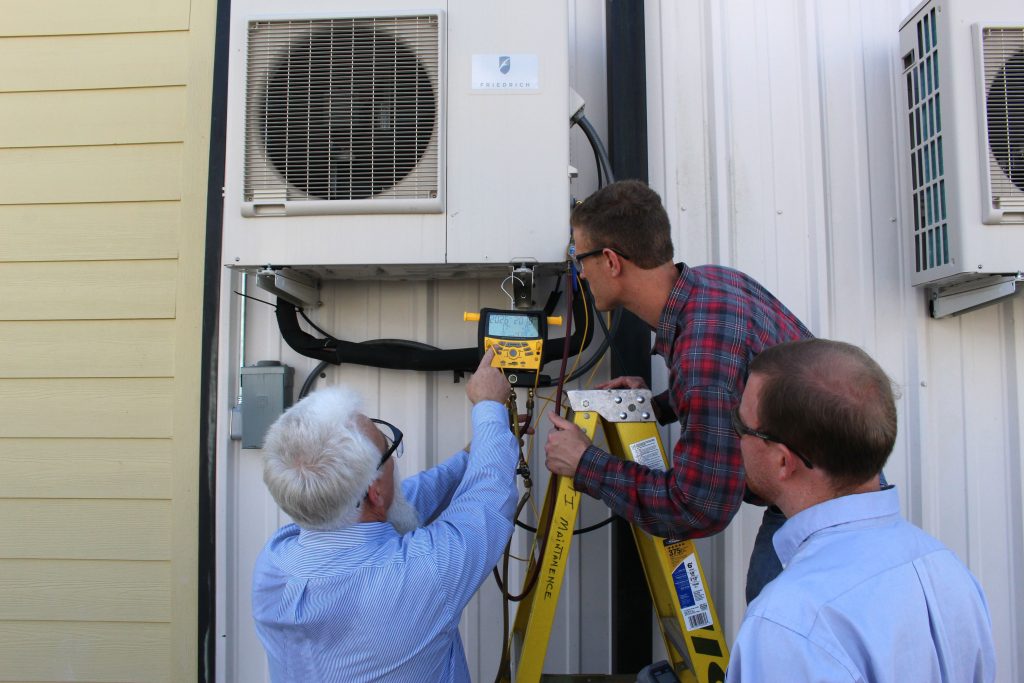
 When you enter HVAC school there are many different things that you are going to learn about, and you will undoubtedly leave with much more knowledge than you went in with. The general idea is for you to leave our school ready to enter the workforce and pursue a career that you can enjoy of the rest of your life. The big question that you might have, however, is what sorts of things can you expect to learn? Today we are going to discuss the SEER efficiency rating and how it relates to the HVAC industry, but first we would like to say a few words about the industry itself. What many people fail to realize is that the HVAC industry is one of the biggest in the world and one of the most relied upon.
How many times has your air conditioner broken down, and how many times have you been forced to seek out repairs? If you have a high quality air conditioner and perform your pre-season maintenance then there is a good chance that you are going to need it from time to time. Now think about how happy you are when the air conditioner repair man walks through your front door, and now imagine that you can actually be one. Hey, you get to be a hero, but first you need to learn the basics. We are going to cover one of those basics right now. Contact ITI Technical College today for more information.
Seer Ratings – a Basic of HVAC School
First of all, SEER is an acronym and it stands for: Seasonal Energy Efficiency Ratio. This is a universal term that was coined by the Air Conditioning, Heating, and Refrigeration Institute in 2008. This is an ‘American only’ term actually, and if you were in Europe you would see a similar standard called the European Seasonal Energy Efficiency Rating, or ESEER.
So what is SEER exactly? When you hear a technician or salesperson refer to the SEER rating they are talking about the cooling output that will occur during a given season. A season, for example being Spring or Summer. When you are looking at the rating you want to make sure that it is as high as possible, with the higher rating meaning greater efficiency.
A Look at the Numbers
Taking a look at the numbers we can see that the SEER rating is applicable for 125 days, or an average season. For example, an air conditioning unit with a British Thermal Unit Per Hour of 1,500 will have a SEER rating of 10 BTW/wh, and will operate for 1000 hours. This is assuming of course that you are operating it for eight hours per day for 125 days. HVAC training will show you that the SEER rating refers to the rating of the unit when it is in a specific condition. We would generally be talking about the unit in prime condition, in case you were confused.
 In the United States, the SEER rating will more than likely be above 9, though you may, with your HVAC certification, find yourself working on units with a lower efficiency. As time goes by these aging units are typically replaced and you might find yourself tasked with doing exactly that. More often than not, you will see unites that have a rating of 14 to 14.5, though you should be aware that residential window units are exempt from the SEER laws, meaning they can be around 10. Is it advisable? Absolutely not, but it is definitely not unheard of.
Those in residential homes will find that these are not only better for the environment, but also a bit easier on the wallet. A higher SEER rating will make for greater efficiency and therefore a more palatable energy bill, to say the least. This is something that you will learn to advise your customers of when you are attending HVAC school and it will most definitely contribute to your education.
For more, read fun facts about the HSPF rating you will learn in HVAC service training. You can also learn more about this topic in the ultimate guide to becoming an HVAC contractor in Louisiana.
Want to know more? There is plenty for you to learn at our school and all you need to do is sign up. Financial aid may be available to those who qualify, and it will not be too long before you are ready to progress on your brand new journey.
Ready to start training for this career? Explore the Associate of Occupational Studies (AOS) Degree in Air Conditioning, Refrigeration, & Electrical Technology at ITI Technical College.
For more information about graduation rates, the median debt of students who completed the program, and other important information, please visit our website: https://iticollege.edu/disclosures/