
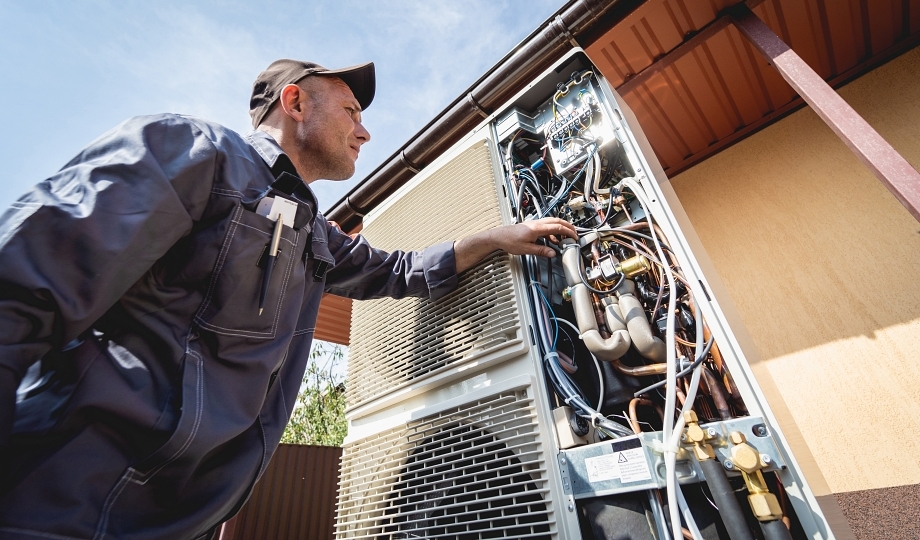
HVAC opportunities you have not considered go beyond residential installations and repairs. HVAC training introduces students to a variety of heating, cooling, and refrigeration systems used in homes, businesses, and industrial settings, opening the door to many career paths within the industry.
Benefits Of Working In The HVAC Industry
 Working in the HVAC industry offers benefits, such as strong job security, high demand, and competitive salaries without requiring a four-year degree. You can experience hands-on problem-solving, varied work environments (residential, commercial, and industrial), opportunities for specialization, and business ownership. Enjoy the satisfaction of keeping people comfortable while contributing to their HVAC systems’ efficiency. The work is active, challenging, and less prone to outsourcing, with clear paths for career growth.
HVAC Opportunities You Have Not Considered
- Refrigeration Technician: While related to HVAC, this role focuses specifically on installing, maintaining, and repairing complex refrigeration systems in supermarkets, medical facilities, restaurants, florists, and food shipping/storage.
- Chiller Technician: Specializing in large-scale chiller systems used in commercial and industrial settings like hospitals or large manufacturing plants. This niche often involves working with complex equipment, including centrifugal and absorption machines, and can be very lucrative.
- Boilermaker/Boiler Technician: These professionals install, maintain, and repair boilers, closed vats, and other large vessels that are essential for heating in many commercial and industrial facilities.
- Facilities/Building Supervisor: Working on-site for a single large facility, such as a hospital, university campus, or industrial plant. This role often involves a mix of maintenance, troubleshooting, and repairs on diverse systems with a more consistent work schedule than traditional service calls.
- Self-Employment: With adequate HVAC education, training, and experience, you may want to start an HVAC business of your own and enjoy its benefits.
Design, Consulting, And Education HVAC Opportunities
Job and career opportunities include HVAC Designer, which is an office-based role focused on designing entire HVAC systems for large commercial, offshore oil and gas, or hospital projects. It requires a deep understanding of system design and blueprints. For those who are computer-savvy, a Control Programmer career involves programming the Direct Digital Control (DDC) systems that automate and manage a building’s environmental controls.
| “While a central or ductless HVAC system is essential to any home or business, there are many job and career opportunities you can explore.” |
 Emerging And Related Fields
HVAC opportunities you have not considered include specialized and rewarding career paths that extend far beyond traditional installation and service work, such as:
- Solar Photovoltaic Installer/Solar Technician: As demand for green energy grows, HVAC skills can transfer naturally to the installation and maintenance of solar panels and related equipment.
- Wind Turbine Technician: This role involves maintaining wind energy systems, another rapidly expanding field in green energy where mechanical skills are valuable.
- Energy Auditor: This person assesses buildings to determine their energy efficiency and recommends improvements, which heavily involves evaluating HVAC systems.
- Sheet Metal Worker/Fabricator: Specializes in creating and installing the ductwork and other metal components required for HVAC systems.
The Key To An HVAC Career
HVAC Career Growth Opportunities begin with earning an associate degree from an accredited technical school. ITI Technical College prepares students through the Air Conditioning, Refrigeration, & Electrical Technology (AOS) Associate in Occupational Studies Degree, providing the skills needed for entry-level HVAC positions and future career advancement. We welcome you to explore admission to ITI Technical College and this program.
Disclosure: For more information about graduation rates, the median debt of students who completed the program, and other important information, please visit our website: https://iticollege.edu/disclosures/